
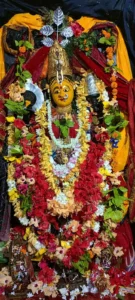
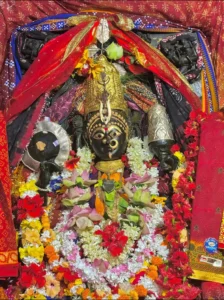
Maa Mangala Temple rests in Kakatpur, Odisha. It originates from the 15th century. People arrive for the goddess’s blessings. They also arrive for its connection to the Jagannath Temple Nabakalebara ritual. Festivals like Jhamu Yatra and Chaitra Mela attract large crowds. It forms a solid stop on the Konark-Puri circuit.

What this temple is about
Maa Mangala Temple is a Hindu shrine for Goddess Mangala. She is a manifestation of Shakti. Worship occurs right here in Kakatpur. Pilgrims from the Shakti tradition come regularly. Travellers often combine it with Konark and Puri. The atmosphere feels ancient. Really ancient. You sense the history the moment you step into the compound.
Where exactly it sits
The temple stands in Kakatpur village, Odisha. It’s 21 km from Konark Sun Temple. The village sits near the Prachi river. Locals sometimes call it Saraswati. Tradition says the deity emerged from this river. Visitors at Konark just take a short drive. The road is decent mostly. It gets narrow near the village though.
When it was built
Construction dates to the 15th century. It’s regarded as a symbol of the ancient Shakti Pithas of Kalinga. That historical region covers most of present-day Odisha. So this isn’t just a random temple. It carries serious spiritual weight.
Who Goddess Mangala is
She’s the presiding deity. Hindus worship her as a form of Durga. But here’s the twist. Earlier, Buddhists revered the same deity as Tara. So the temple holds significance for both traditions. That overlap is pretty rare. You see it in the rituals sometimes.
Mangala as Tara in Buddhist tradition
In ancient times, Buddhists identified Goddess Mangala with Goddess Tara. This explains why both Buddhist and Hindu devotees associate with the shrine. It’s not just a Hindu spot. It’s shared ground. Respectful shared ground.
Mangala as Durga in Hinduism
Present-day worship sees Hindus venerating Mangala as a form of Durga. This connection shapes the festival calendar. Basanti and Sharadiya Durga Puja are big here. The energy shifts during those times. Loud. Colourful. Packed.
What she symbolizes
Maa Mangala symbolizes happiness, purity, love, peace, power, truth, and knowledge. Big list. Devotees pray for protection. And safe journey. Pretty much covers everything you need in life.
The legend behind the temple
Story goes Goddess Mangala lay hidden under the waters of the Prachi river near Mangalapur. Until a boatman recovered her. This story explains the temple origin. And the name Kakatpur. It’s the classic “found in the river” trope but the details make it special.
How the deity was recovered
The Prachi river flooded. A boatman got trapped. Couldn’t reach middle or shore. Stayed in the water a full day and night. Exhausted. Goddess Mangala appeared in his dream before dawn. Gave instructions to retrieve her from the riverbed. He dived. Found the deity. Brought her to the bank. Installed her in nearby Mangalapur village. The dream part is key. It wasn’t just luck. It was divine GPS.
The boatman’s dream
The flood stopped the boatman. He was stuck. Day and night in the water. The goddess’s instruction in his dream ended the ordeal. Started the temple tradition. Imagine that. Treading water all night. Then a dream tells you where to dive. Wild.
How Kakatpur got its name
Kakatpur comes from two Odia words. Kak (crow) and atka (detained). A crow dived into the river at the exact spot where the goddess was recovered. Never surfaced. The place became Kakatpur. Crow detained. Kak-atka-pur. Makes sense when you hear it in Odia. Sounds poetic.
Link to Shakti Pithas of Kalinga
The temple is described as a symbol of the ancient Shakti Pithas of Kalinga. Places Goddess Mangala within the region’s early Shakti worship. Devotees of the Shakti cult form the core pilgrim base. You see tantric symbols if you look close at the carvings.
Connection to Jagannath Temple
This is the big one. Maa Mangala Temple directly links to Jagannath Temple in Puri through the Nabakalebara ritual. Main priests of Jagannath Temple seek the goddess’s guidance. When they search for the sacred wood. Daru Brahma. Used to carve new idols. This link makes her the boss of the biggest ritual in Odisha.
How she guides the search for Daru Brahma
During Nabakalebara, Goddess Mangala guides the Jagannath Temple main priests to three divine Daru Brahma. Sacred neem logs. The priests carve the new idols of the three deities from these logs. She points. They find. Simple as that. But the process is secret. Complex chants. Meditation. The priests sleep in the temple sometimes waiting for the vision.
What is Nabakalebara and frequency
Nabakalebara is the ritual replacement of the Jagannath deities’ wooden idols. Occurs once every 12 to 19 years. Long interval. Makes it one of the most auspicious events associated with the temple. Last one was 2015. Next maybe 2034? Or 2026? Depends on the lunar calendar. Astrologers decide.
Which priests seek guidance
The main priests of the Jagannath Temple seek her guidance before identifying the Daru Brahma. This role is the temple’s strongest point of distinction among Shakti shrines. No other temple has this specific job. It’s unique.
Spiritual and cultural significance
The temple serves as a centre for worship and spiritual reflection. Preserves traditional life of Kakatpur community. Pilgrims regard the goddess as guardian and guide of travellers. You see old ladies doing parikrama. Kids playing in the sand. Life happens here.
Why Shakti devotees visit
Shakti devotees visit for blessings of Maa Mangala. Pilgrims also seek protection. And safe pilgrimage. It’s a Shakti Peetha symbol. That draws the serious sadhaks. They sit for hours. Chanting. Silent.
Fire-walking ritual significance
The fire-walking ritual performed during Jhamu Yatra is a test of devotion. Devotees who walk over burning embers believe Maa Mangala’s blessings protect them until the act is complete. It looks terrifying. Feet don’t burn usually. Faith thing. Or callous thing. Either way intense.
How temple reflects local Odia culture
Temple festivals, carvings, and rituals reflect Odia religious and cultural heritage. Local communities organize the annual celebrations. Keep traditions active. It’s not a museum piece. It’s living culture. The priests are local families. Generations deep.
Architectural and ritual features
Temple known for Odia carvings behind the deity seat. And a stone bed associated with the goddess’s daily rest. The simplicity of the shrine is part of its character. No gold plating. No AC hall. Just stone and faith.
What are Khilana and Prabha carvings
Khilana and prabha are typical Odia carving styles found at the back of the goddess seat. Visitors can see them during darshan. Intricate work. Floral mostly. Geometric borders. Very Kalinga style. You need a torch sometimes the light is low back there.
What is the stone bed of Maa Mangala
The stone bed is a bed carved entirely from stone. Said to be the goddess’s resting place after she tours the universe each day. The bed looks worn. As if long in use. Visitors can observe it during the temple tour. It sits in a side chamber. Cool to touch even in summer. That freaks people out a bit.
Festivals celebrated
Maa Mangala Temple celebrates Jhamu Yatra, Chaitra Mela, Nabakalebara, Basanti Durga Puja, Sharadiya Durga Puja, and Shri Durga Sayana Utsav. Temple rituals followed on festival days and ordinary days alike. Calendar is full.
What is Jhamu Yatra
Jhamu Yatra is the temple’s most prominent festival. Features the fire-walking ritual. Key reason many visitors time their trip around the festival calendar. Usually April. Hot as hell. But the crowd is electric.
What is Chaitra Mela (Pali Jatra)
Chaitra Mela, called Pali Jatra by locals, takes place in the Chaitra month. March to April. Pilgrims arrive from different regions. Temple holds a devotional atmosphere throughout the month. Fair grounds pop up. Sweet stalls. Toy stalls. Chaos. Good chaos.
What is Nabakalebara at Maa Mangala Temple
Nabakalebara is the festival where the temple’s connection to Jagannath Temple becomes visible. Occurs once in 12 to 19 years. Celebrated on a grand scale. The whole village transforms. VIPs come. Security tight. Hard to get close darshan then.
Also read: 5 things to do at Maa Mangala Temple, mythological and spiritual significance of Maa Mangala Temple.
What are Basanti and Sharadiya Durga Puja
Basanti Durga Puja held in Chaitra month. Sharadiya Durga Puja is the larger autumn celebration. Basanti Durga Puja observed on a smaller scale but honours the power and supremacy of Maa Mangala and of women. Spring vs Autumn. Both fierce.

What is Shri Durga Sayana Utsav
Shri Durga Sayana Utsav is one of the temple’s annual Durga festivals. Confirm the current year dates with the temple before planning a visit. Dates shift. Lunar calendar stuff.
How to plan a visit
A visit to Maa Mangala Temple is best planned alongside Konark and Puri. Sections below cover timings, season, routes, and accommodation. Do the triangle. Konark morning. Kakatpur lunch. Puri evening. Or reverse.
Maa Mangala Temple timings
Temple open every day from 8 am to 12 noon and from 1 pm to 6 pm. Verify the hours locally before travelling. Since the original listing printed the morning closing as “2 noon”. Typo probably. But check anyway. Priests take lunch break seriously.
Morning and afternoon darshan hours
Temple closes for a break between 12 noon and 1 pm. Visitors arriving at midday should plan to wait until the afternoon session. Sit under the banyan tree. Drink coconut water. Watch the goats.
Best time to visit
Best time to visit is the winter season. October to March. Temple stays open all year. But this period brings the most festivals and yatras. Weather is human. Not melting.
Why October to March is peak season
Visitor numbers rise from October to March because the weather is comfortable and festivals fall in these months. Chaitra Mela, held between March and April, extends the busy period. December January is peak peak. Book rooms early.
Is the temple open year-round
Yes, Maa Mangala Temple is open to visitors and devotees throughout the year. Monsoon is green. Muddy. But open. Summer is brutal. 40 plus. Go early morning if summer.
Crowd levels during festivals
Festival periods, including Jhamu Yatra, Chaitra Mela, and the Durga Pujas, bring the heaviest crowds. Travellers who prefer a quieter darshan should avoid these dates. Unless you want the festival vibe. Then go exactly then.
How to reach Maa Mangala Temple
Visitors reach Maa Mangala Temple by road, rail, or air. With Konark and Puri as the most convenient bases. Travel time depends on the starting point and the mode of transport. Road is best. Flexible.

How to reach by road
Road travel is the most direct option. Kakatpur lies 21 km from Konark. The drive is comfortable from nearby towns. NH and state highways connect well. Auto rickshaws from Konark charge maybe 300-400 return. Bargain hard.
How to reach by rail
Travellers going by rail arrive at a major station in the region and complete the journey by road. Check the nearest railhead and onward transport before booking. Puri station is the main one. 50 km away. Bhubaneswar station bigger. 70 km. Taxi from station.
How to reach by air
Travellers going by air land at the nearest airport and continue by road. Check the current airport and road connections before booking. Bhubaneswar Biju Patnaik airport is the one. 60-70 km drive. Prepaid taxi counter exists.
How far is the temple from Konark
The temple is 21 km from Konark. So visitors to the Sun Temple can add Kakatpur to the same trip. 40 mins drive. Scenic route. Cashew trees. Paddy fields.
How far is the temple from Puri and Bhubaneswar
Confirm current road distances and travel times from Puri and Bhubaneswar with a mapping service before departure. Roughly Puri 50 km. Bhubaneswar 70 km. Traffic near Pipli can add 30 mins. Pipli applique village is on the way. Stop there.
Where can you stay near Maa Mangala Temple
Visitors stay at Konark or at Kakatpur. Options range from dharamshalas to eco-resorts. With rooms priced between Rs 700 and Rs 4,000 per day. Konark has more choice. Kakatpur is basic.

Budget stays and dharamshalas
Budget travellers can choose OTDC Yatri Niwas, Durga Mandap and Lodge, Greenland Guest House, Labanya Guest House, or Lodge Madhumagna. Basic rooms. Clean sheets mostly. Hot water iffy. Ask before booking.
Mid-range and eco resorts
Mid-range and eco-oriented options include Lotus Eco Resort, Eco Retreat Resort, WildDunes Konark, Kings Coco Resort, and Sand Castle. These are near Konark mostly. Beach side. Nice for families. Book online early for weekends.
What is the typical room rate
Rooms cost Rs 700 to Rs 4,000 per day. Depending on the property and the season. Festival season rates double sometimes. Cash preferred at small places. UPI works at resorts.
What nearby attractions can you combine
The two most natural additions are the Konark Sun Temple and the Jagannath Temple in Puri.
Konark Sun Temple
The Konark Sun Temple is 21 km from Kakatpur. Which makes a same-day combination practical. UNESCO site. Chariot wheels. Erotic carvings. Go early morning for light. Avoid noon sun.
Jagannath Temple, Puri
The Jagannath Temple shares the Nabakalebara connection with Maa Mangala Temple. For Puri planning, see our Jagannath Temple travel guide. Rath Yatra time is madness. Avoid unless you love crowds.
Frequently asked questions
Is Maa Mangala Temple a Shakti Peeth
The temple is described as a symbol of the ancient Shakti Pithas of Kalinga. And is a major shrine for the Shakti cult. Not one of the 51 classic ones. But symbolically yes. Locals treat it as one.
Can non-Hindus visit the temple
The temple has historic Buddhist associations through Goddess Tara. And draws both Buddhist and Hindu devotees. Confirm current entry rules locally. Generally yes. Be respectful. Remove shoes. Cover shoulders.
Is there a dress code or photography rule
Temple dress and photography rules are not stated in the source material. Confirm them locally before the visit. Usually no photos inside garbhagriha. Outside okay. Dress modest. Cotton best.
How much time should you allow for a visit
Allow a half day when combining darshan with the stone bed and carvings. And a full day when adding Konark. If doing the triangle Konark-Kakatpur-Puri, start at 6 am. Finish late. Tiring but worth it.


