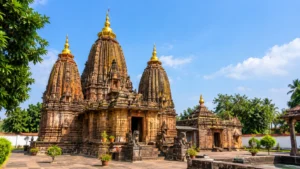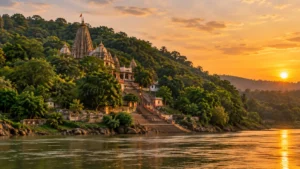
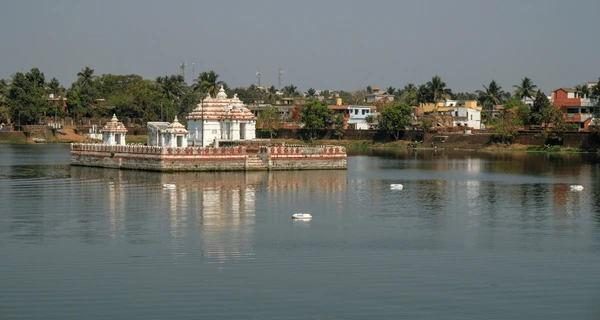
From the narrow lanes of the ancient quarter, the scent of wet rock drifts through air thick with smoke from ritual offerings. Right at its heart lies a wide stretch of still water known as Bindu Sarovar. Nestled within Ekamra Kshetra – Bhubaneswar’s cluster of age-old temples – it holds more weight than an ordinary pool. Locals speak of it as a vessel filled with traces from each sacred river across the country. Long ago, people say Shiva made this lake for Parvati when she felt tired. Visitors come from distant places to bathe here. Though quiet at first glance, the water holds weight – years of bad luck thought to fade in its touch. As daylight slips away, bells from the temple ride the air, bouncing off ripples below. Stone towers catch what light remains, their shapes flickering like flames on the lake’s skin.
Famous temples in Bhubaneswar
Under the setting sun, Bhubaneswar’s landmarks come alive – its stones painted in deep reds and warm oranges. Tallest of the lot, the Lingaraj Temple rises without hurry. Its 180-foot tower slices the sky. People who live nearby tell: the deity inside holds shape like water, not quite Vishnu, not exactly Shiva. Built long ago, it holds stories carved into every tier. Outside the walls, a modest rise lets your eyes wander across the entire site, even though only Hindus enter the central temple. Beliefs mingle here, held close by the stone itself.
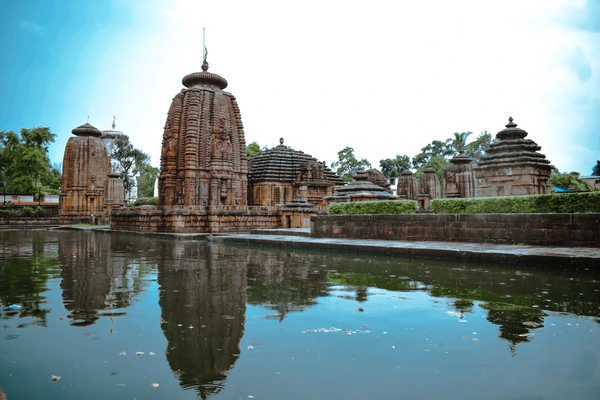
Looking for tourist spots in Bhubaneswar? Try the Mukteswara Temple. Though tiny compared to others, its beauty stands out. A well-known stone archway called a Torana rises like a carved rainbow above the entrance. Inside Bhubaneswar, spots such as this one act less like museums. Instead they breathe like homes – places where prayer arrives daily, carried in by quiet footsteps.
Ancient places in Bhubaneswar
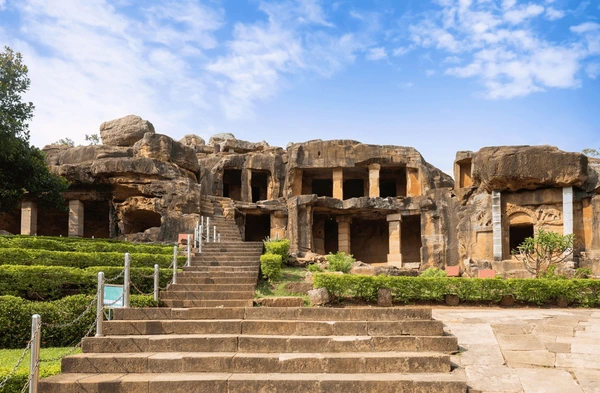
A short walk around seven kilometers beyond the city center leads you to ancient openings carved into rocky slopes. Hidden just outside Bhubaneswar, these hollows draw many eyes each year. Hollowed from stone two millennia back, they offered shelter to Jain spiritual seekers. Instead of being constructed, rock was patiently removed by hand long ago. Sloping ground shapes the area, so steps cut from stone wait underfoot. Movement upward comes naturally once feet meet the first riser.
Up on Udayagiri, people talk most about the Rani Gumphi carved deep into stone, it holds stories of war and kings moving through crowds. Two levels tall, its walls stay busy with shapes showing fights and parades frozen in rock. Khandagiri climbs steeper, ending with a Jain house of prayer perched above everything else. At the peak, silence sits heavier than expected, broken only by leaves or sudden monkey laughter.
A day tour to Nandankanan
A visit to Nandankanan Zoological Park often comes up when folks talk about Bhubaneswar must-sees. Roughly twenty kilometers out from downtown, it spreads wide like a jungle. White tigers move freely through sprawling enclosures here, more natural than caged. Beside Kanjia Lake, the plant-filled gardens stand out most to me. Floating along in a paddle boat could be quite fun. When traveling with children, this spot near Bhubaneswar stands out for its calm appeal.
Peace Pagoda in Bhubaneswar
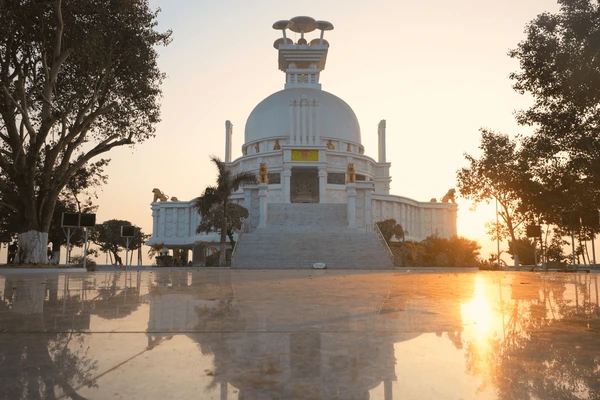
A quiet climb leads you to Dhauli Hill. Back then, it was soaked in conflict – the Kalinga War raged here centuries past. Blood marked the edge of the Daya River, seen by Emperor Ashoka himself. That sight shifted everything, he dropped war for Buddhist teachings. Now, a gleaming white Peace Pagoda rests at its peak. From that height, what spreads below catches your breath. Down below, green rice fields stretch out, rivers curling across flat land like. For a wider coastal itinerary, our places to explore in Balasore helps connect this place with nearby stops.
A Quick Trip to the Craft Village Pipili
A spare afternoon could lead you here – Pipili, just twenty kilometers down the road from Bhubaneswar toward Puri. Brightness spills across the main stretch which is impossible to miss. Home to craft known as Chandua, where fabric gets stitched into new shapes. Instead of plain shades, imagine bold reds dancing with sharp yellows, deep greens tagging along. Objects fill shop fronts: oversized umbrellas meant for gardens, hand-carried bags, pieces built to hang still on walls. Color doesn’t whisper in this village; it moves loud through every seam.
Travel tips for Bhubaneswar trip
October through March treats visitors to Bhubaneswar with gentle breezes and mild skies. Cool air makes strolling between sights feel smooth, almost effortless. Come in April, temperatures rise – sunshine turns sharp, relentless. Heat drapes over everything like a thick cloth. While moving around the city, taste what stalls offer; flavors surprise even cautious eaters. Around Shahid Nagar, spot a stall selling Dahibara-Aloodum. This favorite pairs soft lentil balls with hot potato gravy. Locals can’t get enough of the blend – creamy, sharp, earthy. Found tucked down lanes where steam rises at dawn. The dish hums with cumin and curiosity. Each bite tells a story older than the menu.
When is the best time for a trip to Bhubaneswar?
Winter months bring mild days perfect for strolling outside. Between October and February, temperatures stay comfortable. This stretch offers relief from heat, making exploration easier. Fewer crowds appear during these cooler weeks. Sunshine remains steady without being harsh.
Closest bus stop – where could it be found?
Buses roll in and out of Baramunda ISBT, the key hub sitting roughly six kilometers outside central Bhubaneswar. This spot links travelers to nearly every nearby destination worth seeing. Though removed from downtown, its reach covers wide ground.
When does tourist places open in Bhubaneswar?
Few temples unlock their gates at six in the morning, shutting down again by nine at night. Places such as Nandankanan Zoo start welcoming visitors from eight onward, wrapping up activities at five thirty – except each Monday when silence fills the grounds.