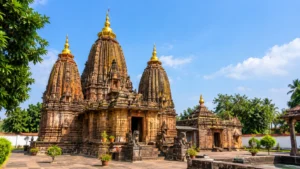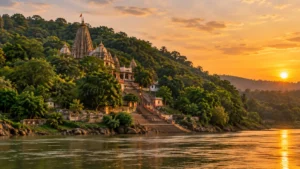
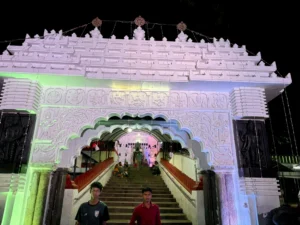
Rising from a pine-scented crispness, the chilly air is the kind you associate with being in the mountains, so different from the humid Odia coast near sea level. At 06:00 AM, the hilltops of Koraput are shrouded in a soft silver mist. On ascending the wide stone steps, the chanting, the sharp ring of brass bells and the smoky scent of(camphor) coming from the temple will reach out and greet you. The facade of the hill temple is the first you set your gaze on when you are here. And you suddenly realise that this pilgrimage site means so much more than you ever imagined. There is a bridge of time between the ancient tribal life and mainstream Vedic piety right at your doorstep.
Welcome to Sabar Srikhetra or Jagannath Temple of Read Koraput Travel Guide.
The peaceful temple premises on top of the hills make up a nice place to explore. I have personally visited in the early hours of the day. I would say the most tranquil and stirring part is watching the temple bathed in the very first rays of the morning sun.
The Story Behind Sabar Srikhetra
The story behind Sabar Srikhetra can be directly traced back to native Sabar tribes who had resided in the Eastern Ghats for centuries together.
As per folklore of indigenous tribes, before the establishment of Lord Jagannath inside the enormous stone mounds at Puri, the tribes had worshipped him secretly within the thick jungles as Nila Madhava under the patronage of Biswavasu, the headman of the tribes.
A Temple Built for Universal Equality
This is not a classic historical monument, here ordered by the King yet built solely by the will of the community in the late 20th century. It was built in 1972 with the idea of restoring the original tribal basis of the God and of abolishing hardened caste divisions.
The ancestral Sabara way of life, which is somewhat marginalised elsewhere, is cherished as the soul of the shrine, so that everyone can perceive a quick sense of universal acceptance.
Connection with Lord Jagannath and Puri
Knowing how intimately this hill-top sacred place is woven into the spiritual fabric of the coast makes your passage through these courts so much more meaningful ^3 The association of Lord Jagannath with Puri and its subsequent impact on the development of the city (one which began in the early years of the thirteenth century and has lasted through to modern times) was a continuing process.
The spiritual kinship with Lord Jaganath (Jagannatha) & Puri
Where the elaborate and complex Brahma-murti procedure of the 12 th century at Puri is confined to the strongly ritualistic temple at Puri, this temple honoured its tribal background with the utmost sanctity.
‘Sabara’ is literally a term implying the Sabara tribe, and Srikhetra is the formal holy name of Puri- even calling this place the ‘Srikhetra of the Sabaraas’.
Rituals and inclusiveness
Sounds of group participation in ritual. That apparently includes many, for the diversity of action and/or kind of performance involved. What affects you incredibly deeply during my viewing of the morning puja is the 100% completeness of the situation.
Certain rituals in set Vedic traditions are restricted to who the priest lineage is, yet here, people from an ancient Sabara tribe take part in main temple proceedings alongside the locals.
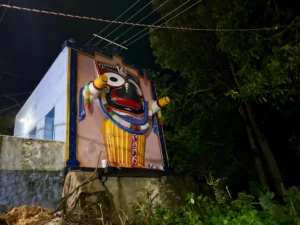
There are no exclusions over caste, creed or land or country. If you come upon these steps with a pure heart, you are allowed to prostrate yourself at the Daru when the gods (Daru Brahma).
And if you so plan your visit that you land there during the monsoons, these deserted hilltop meadows turn into a drumbeat blackpit sea of mass merriment.
Sabara Srikhetra Rath Yatra Festival
Picking one’s way through the crowds to get near the purnachar, the host of people who have gathered in the streets to witness and participate in the Sabara Srikhetra Rath Yatra Festival, is an incredible cultural experience. Celebrated every year in Asadh (June-July), the event is modelled on Puri’s internationally renowned car festival, but offers an incredible, unique and extremely moving Indian tribal element.
The city of Koraput is practically dancing when these three huge, brightly decorated wooden chariots are pulled on the main roads, bearing the image of Lord Jagannath, Lord Balabhadra & Devi Subhadra.
What is unique about this festival is that for the first time ever, the ceremonial washing of the chariots (Chera Pahara), a ritual done traditionally by a king, is done here by the local tribal chieftain with the other nobodies of the urban political hierarchy.
The Grand Tribal Gathering
Scores of native inhabitants from the surrounding hillside village come with their traditional dress and their handmade instruments to heave the enormous ropes while you join finger to finger in unison, pulling the large chariots up the serpentine hillside road and have an exhilarating thrill of tribal drums (Dhol and Nishan), flutes and drunken shouts of joy.
Temple Architecture and Layout
A slow walk through the open grounds of the physical premises of the temple is a stunning realisation of the coalescence of Angolica’s traditional Odishan temple design with the light, scenic, breath-taking mountains.
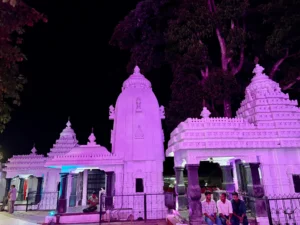
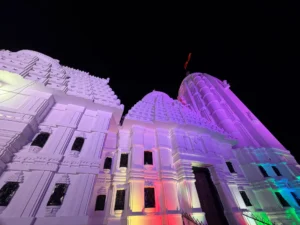
Temple design and spatial planning: As you look around at the Temple Architecture and Layout, you will see the classical Kalinga style with its high main sanctum (Vimana), the hall (Jagamohana) and its open prayer pavilions. Situated on a hilltop (around 2900feet or 900meters above sea level the temple’s distinctive white spire (Sikhara) dramatically contrasts with the surrounding green hills.
Surrounding Shrines and Courtyards
Adjacent to the Shrines and their Courtyards, wander the sprawling paved stone courtyard; you will see beautiful repetitive patterns of small sub-shrines to Lord Shiva, the Goddess Vimala, Lord Ganesha, and the Sun God. The whole complex is kept spotless with the help of local volunteers.
On the eastern ledge of the courtyard are stone seats upon which to rest and enjoy the mountain wind and watch the mist rise from the valley in the morning.
How to Reach Sabara Srikhetra?
Just to reach this southern hill district in Odisha, you’ll have to undertake an adventure by yourself, travelling on some of the most beautiful ghat roads and railway networks of East India.
By Train: Koraput Junction (KRPU) remains in good rail communication with other big cities such as Visakhapatnam, Bhubaneswar, and Jagdalpur. One of the famous Kirandul-Visakhapatnam passenger train journeys goes through magnificent mountain tunnels, wide bridges, and beautiful valley scenes of the Araku region. If one intends to go from the hilltop gates directly from the Koraputara railway station, a local auto-rickshaw is about 85 to 115 only.
By Road: The National Highways link Koraput with Visakhapatnam (190 km) and Rayagada(110 km) easily. Government and private buses are operating on these routes, while auto Rickshaws are readily available near Koraput Bus Stand at a cost of 50.
By Air: The nearest operational commercial airport is at Visakhapatnam (VTZ), 190 km away, where it is quite possible to book a private taxi for 3,450 to 4,350 easily from there.
Best Time to Visit
Determining the timing of arrival will make sure the mountain weather is at its freshest, proudest and most pleasant form.
Best Time to Visit
Actually, the selection of the Best Time to Visit is only up to the type of experience one gradually expects from a trip:
Winter Window (October to February): This is the top-notch and most favourable window period. The temperature varies between 10°C and 25°C giving very pleasant sunny days and cold misty mornings – exactly what one needs to stroll the temple areas and have a good time in the neighbouring tribal fairs.
Monsoon / Festival season (June to July): For the pulse-raising feeling of Rath Yatra festival, come in June or July. The hillsides come alive with lush greenery, but bring stout brollies and raincoats for the mountain downpours.
Nearby Places
Tribal Museum
Tribal Museum is just behind
Having toured the main temple courtyard, walking out to the local environment uncovers various natural and cultural attractions:
The Koraput Tribal Museum, just literally a two-minute walk through the back gates of the temple complex. Koraput Tribal Museum: Set within traditional-style buildings, the museum gives a knowledgeable, respectful view of the arts, tools, textile practices and farming culture of the tribes around Koraput (Bonda, Gadaba, Paroja, Kondh, etc). Entrance tickets are only a small Rs 20 and warrant an unmissable cultural complement to the temple visits.
Kolaing Dam and Reservoir
Built only 15 km from the temple and seated between green hills, this giant pond with well-kept botanical gardens and tranquil boating services costs about 100-200.
Duduma Waterfall
Located about 65 km away, the enchanting 157-meter precipitous waterfall located on the Machkund River brings one of the most scenic natural sights.
Is there a restriction on entering the temple for non-Hindus, foreigners, and non-orthodox Hindus?
You can enter the temple anytime you want because there is virtually no restriction. This temple is an open sanctuary and is free to enter regardless of a person’s religion, nation, or creed, even allowing such people to enter the main temple sanctum, unlike Puri’s main Jagannath temple, which allows entry only for orthodox Hindu people.
Is there a ticket or fee required with the dress code to access the temple complex?
Fundamentally, there are no entry costs to the temple complex. Though if you want to keep your shoes in the shoe counters, you may need to pay a nominal fee of Rs. 10 at each of the counter locations. While there are no mandatory dress codes, respectful behaviour is to be expected (cover shoulders and knees). Because of this, you should remove your footwear on the way in.
Is it possible for the guests to partake in the temple’s daily Prasad meal?
Yes, this daily Prasad meal consists of traditional wood-fired Abhada Prasad (rice, lentil, and leaf vegetable cooked curries), which are prepared in the temple kitchen. The temple office is issuing food tokens that should be used for the purchase of a meal. Tokens will be offered between 10:00 AM and 11:30 AM, roughly costing 100 to 150 per person, as per the lunchtime in the dining hall, when the food gets fresh served.