
The Biraja Temple is a historic Hindu temple located in Jajpur, Odisha, India. It is around 125 km north of Bhubaneshwar. The present temple was built during the 13th century. The principal idol is Devi Durga, who is worshipped as Viraja (Girija) and the temple gave Jajpur the nicknames “Viraja Kshetra” and “Biraja Peetha”. The Durga idol has two hands (dwibhuja) spearing the chest of Mahishasura with one hand and pulling his tail with the other. One of her feet is on the lion and the other is on Mahishasura’s chest. Mahishasura is depicted as a water buffalo.
The idol’s crown features Ganesha, a crescent moon, and a lingam. The temple covers a large area and has several shrines of Shiva and other deities. According to the Skanda Purana, it cleanses pilgrims and it is called the Viraja or the Biraja Kshetra. Jajpur is believed to have about one crore of Shiva lingams.
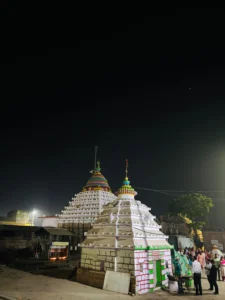
The Bramhalaya Tantra has a hymn, “Aadya Stotra”, dedicated to Shakti. In the hymn, Vimala is the goddess of Puri, and Viraja (Girija) is worshipped in the Utkala Kingdom, which became Odisha. According to the Tantra Chudamani, Sati’s naval fell in the Utkala Kingdom, also known as “Viraja Kshetra”. Adi Shankara, in his Ashtadasha Shakti Peeth Stuti, describes the goddess as Girija. In Tantra literature, the Oddiyana Peetha is located in eastern India near the Vaitarini River.
General Information about Biraja Temple
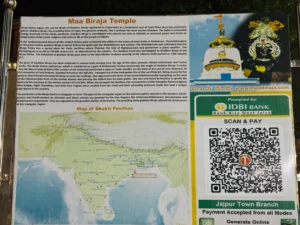
Biraja Temple Jajpur has a great historical and cultural significance as several rituals and activities towards the deities are performed throughout the year. A primary ritual in the temple is Sharadiya Durga Puja, which begins on the night of Krishna Paksha Ashtami. This falls before Mahalaya and ends on Ashwin Shukla Paksha Navami. This Puja, known as Shodasha Dinatatmika Puja, lasts for 16 days. Ratha (Chariot festival) is known as Simhadwaja, and its flag bears a lion. During the lunar transition, from Shukla Ashtami to Shukla Navami an animal sacrifice, Bali Daanam, is performed. Navaratri is performed as Aparajita Puja.
Other festivals include Nakshtra, Shravana, Prathamashtami, Pana Sankranti, Raja Parva, and Navanna. Devi is worshipped daily in accordance with Tantra and Agama traditions as Mahishasurmardini by the Brahmins of Jajpur. Thus, Maa Biraja Temple observes several rituals to pray at.
Distances and Travel Information about Biraja Temple
Biraja Temple is easily accessible from Puri and Bhubaneshwar, which are the major cities of Odisha, and is well known for the preservation of heritage and culture through exhibiting a lot of Hindu festivals and rituals which are even not known to many Indians. Puri and Bhubaneshwar are also well connected to major places of India through road, rail, and air as tourists can plan their travel aiming to reach the centerplace Puri and Bhubaneshwar from where they can explore different temples in and around it.
To reach Biraja Temple, the nearest railway station is Cuttack and Jajpur Keonjhar Road. From there regular buses can be availed to Jajpur town. Mostly private buses run regularly in Odisha. Tourists can take autos from Cuttack railway station to Badambadi bus stand, which is just 3 km away. The bus from Cuttack to Jajpur town takes two and a half hours.
From Jajpur Road to Jajpur town, the travel time is more than one hour by road. From Bhubaneshwar also the tourists can take buses to reach Jajpur town. Bhubaneshwar to Biraja Temple distance is around 2 hours so the tourists traveling via air can reach the temple in about two and a half hours. From Puri to Biraja Temple distance is a bit more than from Bhubaneshwar as it takes around 3 hours to reach Biraja Temple.
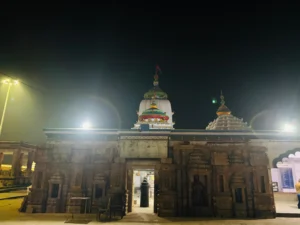
Visiting the Biraja Temple
Jajpur is an important tourist spot in Odisha. Not only religious people but also researchers, political people, and general tourists come over here from time immemorial. As ancient Biraja was the capital of many ancient dynasties, it is anticipated that most kings would have visited the temple to offer their puja. Records suggest that Natha teachers like Matseyndranath and Birupakshnath had visited Goddess Biraja. The Bhaumakara rulers are known to have been devotees of Maa Biraja who had darshan almost daily. Padmasambhava, a Buddhist monk had attained siddhi after penance near Goddess Biraja. Sri Chaitanya and Guru Nanak also visited the Biraja temple in the 16th century as per records.
Thus, the temple embraces everyone who surrenders at the feet of the Goddess. Biraja Temple, known particularly as a religious place and one of the three Shakti Peethas sees a huge influx of pilgrims who come every day in numbers. Temple administration, considering the number of devotees has made a good arrangement for darshan. Biraja Devi Temple is open for devotees to visit from 5.30 am to 1 pm and 3 pm to 10 pm every day. Biraja Temple timings are suitable for tourists as they can stay at the place and have darshan early in the morning when the first offering is done at the temple.
Visual and Stay Information about Biraja Temple
Tourists can find many places to stay near the temple. There are different types of accommodation options like hotels, lodges, resorts, or yatri Niwas. The tourists can make themselves comfortable with the type of accommodation they desire. There are around 15 good stay places where tourists can choose and spend their remaining time to experience the food and culture of Odisha.
Highlights of Biraja Temple:
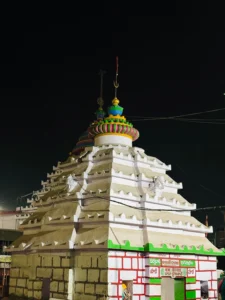
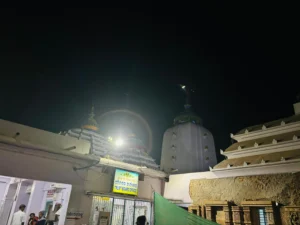
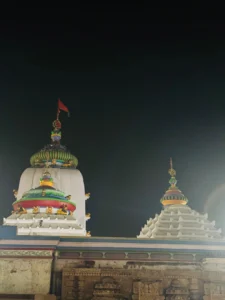
The Biraja Temple is a whitewashed temple with a red flag on top. The temple is made of white stone and has divine sculptures engraved on its outer walls.
Architecture
- Biraja Temple has a lion gate on the compound wall
- The temple has several shrines to Shiva and other deities.
- The temple’s crown features Ganesha, a crescent moon, and a lingam
- Biraja Temple’s main idol is Devi Durga, who is worshipped as Viraja.
- Temple’s main idol is depicted with two hands, one spearing the chest of Mahishasura and the other pulling his tail.
- Temple’s main idol is depicted with one foot on the lion and the other on Mahishasura’s chest.
History
- Some evidences suggest that the Biraja Temple was built during the Gupta period in the 2nd or 1st century CE.
- The present temple was built in the 13th century
- The temple complex was destroyed by invaders in 1569.
Significance
- Biraja Temple is considered to be one of the most important religious sites in India.
- The temple is said to have been built at the spot where Goddess Sati’s naval fell.
Cultural and Religious Significance of Biraja Temple
Biraja Temple, Jajpur, Odisha celebrates many festivals and rituals including Durga Puja, Navaratri, and the birth of Goddess Biraja.
Durga Puja
- Sharadiya Durga Puja: a 16-day festival that begins on the night of Krishna Paksha Ashtami and ends on Ashwin Shukla Paksha Navami.
- Ratha Yatra: A chariot festival where a small idol of Goddess Biraja is placed in a decorated chariot and moved around the temple compound for nine days.
- Bali Daanam: An animal sacrifice performed during the lunar transition from Shukla Ashtami to Shukla Navami.
Navaratri
- Aparajita Puja: A festival celebrated during Navaratri
Birth of Goddess Biraja
- Triveni Amavasya: A festival that takes place on the new moon day in the month of Magha (February)
- Goddess Biraja is decorated as Goddess Savitri: On this day Goddess Biraja is decorated as Goddess Savitri, the consort of Brahma.
Other celebrated festivals are Dola Purnima, Varuni Festival, Mahvshiuva Sankranti, Chandana Purnima, Citalagi Amavasya, Savitri Amavasya, Gahma Purnima, Sunia, Autumnal Durga Puja, Kumara Purnima, Dipavli, Prathamashtami, Dhanu Sankranti, Vakula Amavasya, and Lakhavindha.
How to Reach Maa Biraja Temple?
Maa Biraja Temple is located in the town of Jajpur in Odisha. You can easily reach the temple of Maa Biraja. Since the temple is widely popular throughout the state, Jajpur is quite well connected by the road and rail because pilgrims throughout the country come here to his temple. The nearest railway station is Jajpur Keonjhar Road, which is about 30 kilometres from the temple. Taxis, auto-rickshaws and local buses are also available 24/7 outside the station. It takes almost 45 minutes to reach the temple.
If you’re taking a flight, the nearest airport is Biju Patnaik International Airport in Bhubaneswar. This airport is approximately 110 kilometres away from the town of Jajpur. From the airport, you can either take a cab from the airport or you can take buses as well. You’ll find so many buses near the airport going towards Jajpur. You won’t have any problem on this route since the roads are quite smooth. This town of Jajpur is also well connected with cities like Cuttack, Bhubaneswar, Bhadrak and Kendrapara. The route is also very scenic, you’ll find trees, grass and so much more.
Nearby Places to Visit Around Maa Biraja Temple
If you have plenty more time and you want to visit a few places around the temple of Maa Biraja Temple. There is another beautiful temple nearby Nabhi Gaya Temple. This is such a sacred place for the devotees. Devotees visit this temple to place to perform the rituals in memory of ancestors. Pilgrims come here to show their respect to the ancestors who passed away and to ask for their blessings.
Trilochaneswar Temple
There is another temple you can visit which is known as Trilochaneswar Temple. This is also such a beautiful temple which is dedicated to Lord Shiva. Devotees of Lord Shiva always visit this temple to pay their respects to Lord Shiva. This temple was built centuries ago, and since this is such an old temple, the architecture of this temple is so beautiful and unique. It has beautiful stone carvings and calm surroundings. You can always find History enthusiasts admiring the architecture of the temple, and so many ardent devotees of Lord Shiva.
People who are into Nature and want to spend time in nature and always visit places like Ratnagiri, Udayagiri and Lalitgiri Buddhist complexes. All of these places are located very close to the town of Jajpur. You can easily drive to these places or take a taxi or take public transport If you’re into history, you can easily go and explore these archaeological sites and explore the ancient monasteries, sculptures and also visit the meditation centres. These places will give you a rough idea about the history of the state of Odisha and the town of Jajpur. For wider heritage context, our Temple tourism in India connects this site with India’s broader pilgrimage landscape.
If you’re a fan of water bodies, you can always take a walk along the banks of the Baitarani River. This is such a peaceful spot, where you can sit and enjoy nature.
What is the best Time to Visit Maa Biraja Temple?
The best time to visit Maa Biraja Temple is between October and March, when the weather is a bit cool. The weather is quite pleasant so you can easily visit all the temples, explore more places near the city and surrounding the city. Since so many places don’t have air conditioning, this weather feels very apt for you to explore the city.
Although many devotees plan their visit during Sharadiya Durga Puja and the famous Biraja Fair, when a temple is beautiful and the overall vibe so spectacular.
If you’re planning to visit this town during summer, the months of April to June the weather can take a toll on you as it’s very hot and humid during that time. While the monsoon season means frequent rainfall which might also disrupt your plans to explore the city. that may affect travel plans. Even though nature looks very beautiful after the rainfall, you have to stay cautious if you’re exploring the city during the monsoon.
1.What is the idol of Devi Durga like?
The idol of Devi Durga has two hands, one holding a spear and the other pulling the tail of Mahishasura. One of her feet is on a lion and the other on Mahishasura’s chest.
2. What is the significance of the temple?
The temple is one of the Shakti Peethas in Odisha. It is also known as Viraja Kshetra and Biraja Peetha.
3. Who is the main deity in the temple?
The main deity is Devi Durga, who is worshipped as Viraja.
4. What is the nearest bus stand and railway station?
The nearest bust stand is the Jajpur Bus stand, which is about 2 km from the temple. The nearest railway station is Keonjhar Road Railway station.
5. What is the temple’s location?
The temple is located on the banks of the Vaitarini River in Jajpur, about 78 km from Cuttack.
Conclusion
The Biraja Temple, also known as Viraja Kshetra, is a historic Hindu temple in Jajpur, Odisha, India. It’s a major religious site in India and is considered to be Shakti Peetha.
- Biraja Temple is a significant pilgrimage site for devotees of Goddess Biraja.
- The Temple complex includes the main temple, smaller shrines, and temples dedicated to other deities.
- The temple’s history dates back to the Gupta period, and the present temple was built in the 13th
- The temple has been restored several times after being destroyed by invaders and war.
- The temple is a symbol of Odisha’s cultural heritage.
- The chariot of Devi Biraja is known as the Singhadhwaja Ratha.
- The smaller shrines and temples, including those dedicated to Lord Hanuman and Ishaneshwara.


