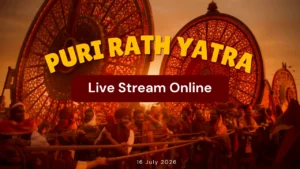
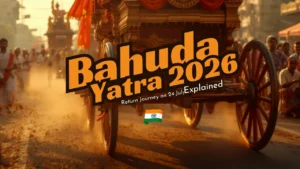
The famous rituals of the Puri chariot festival include Pahandi Bije, the ceremonial carrying of the deities from the temple to their chariots; Chhera Pahara, the symbolic sweeping of the chariots by Puri’s traditional ruler; and the rope-pulling ritual in which devotees physically move the three chariots along Grand Road. Pahandi Bije takes place before the chariots depart, involving a slow, swaying carry of each deity down the temple steps. Chhera Pahara follows, symbolizing that even royalty serves the deities without distinction. The rope-pulling ritual then carries the chariots 3 km toward Gundicha Temple on 16 July 2026. This article details each ritual and where visitors typically see them performed.
Knowing the sequence of these rituals helps visitors time their arrival to catch the specific ceremony they most want to witness. The Rath Yatra Puri 2026 travel guide frames these rituals within the wider festival guide, and the sections below explain each ceremony individually.
Table of Contents
ToggleWhat Happens During Pahandi Bije?
Pahandi Bije is the ceremonial carrying of Lord Jagannath, Balabhadra, and Subhadra from the temple’s sanctum down to their waiting chariots. Temple priests move each deity in a slow, swaying motion accompanied by chanting and music, a process that can take considerable time given the deities’ weight and the crowd surrounding the temple steps. This ritual takes place before the chariots begin moving along Grand Road.
What Does Chhera Pahara Symbolize?
Chhera Pahara symbolizes the equality of all devotees before Lord Jagannath, performed when Puri’s traditional ruler sweeps the area around each chariot with a golden broom. This ritual demonstrates that even a person of royal status serves the deity without special privilege during the festival. Chhera Pahara takes place at both the start of the outward journey and the Bahuda Yatra return.
How Does the Rope-Pulling Ritual Work?
The rope-pulling ritual works through devotees gathering at thick ropes attached to each chariot, pulling in coordinated bursts to move the vehicles along the 3 km Grand Road route. Temple officials and volunteers help organize the crowd into pulling groups to keep the chariots moving safely. This ritual gives ordinary devotees direct physical participation in the festival, distinct from simply observing.
Rituals visitors can witness during the festival include:
- Watch Pahandi Bije as priests carry the deities to their chariots
- Observe Chhera Pahara as the traditional ruler sweeps each chariot
- Join the rope-pulling ritual moving the chariots along Grand Road
- Attend evening rituals near Gundicha Temple after arrival
| Ritual | Timing | Where to Watch |
|---|---|---|
| Pahandi Bije | Before chariot departure | Near the temple’s main steps |
| Chhera Pahara | Start of outward journey and Bahuda Yatra | Beside each chariot |
| Rope-pulling | Throughout the 3 km procession | Along Grand Road |
Fitting These Rituals Into a Travel Schedule
Timing an arrival to catch Pahandi Bije requires reaching the temple area hours before the chariots begin moving along Grand Road. 3-day travel itinerary for Puri Rath Yatra schedules time specifically around this ritual sequence within its broader three-day plan.
Can visitors join the rope-pulling ritual themselves?
Yes, devotees are welcome to join the rope-pulling ritual alongside other visitors, subject to crowd-management guidance from temple volunteers and Odisha Police.
Does Chhera Pahara happen only once during the festival?
No, Chhera Pahara takes place twice, once at the start of the outward journey and again during the Bahuda Yatra return on 24 July 2026.
Checking Exact Ritual Timing for 2026
Confirming precise timing for each ritual requires checking the full festival-day schedule rather than relying on the general sequence alone. key dates and schedule for Puri Rath Yatra 2026 lists the exact dates and windows for every major ritual across the 2026 festival calendar.