
The humid Ramagiri forest reserve exudes cool, moist air with a fragrance of wild lime, crushed leaves, and limestone as the early morning hours arrive at 06:30 AM. The sun’s first rays are cutting through the mountain forest with a thick foliage layer when you are standing facing an outcrop of limestone of a huge size overlooking the rushing Shabari river. In front of you is the narrow rock-carved stone staircase leading towards the mouth which resembles a giant of a natural cave.
On reaching the cave bottom after taking the steps, an icy cave air that has a smell of burnt camphor and oil lighting is welcomed by your nose and the falling drops from the cave ceiling are steady. Right at the spot, a clay lantern’s flickering light throws a shadow on the huge marble self-manifested Lingam.
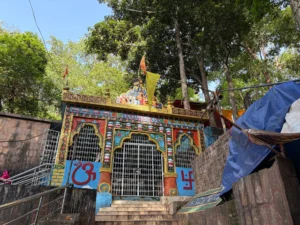
Why Visit Gupteswar Shiva Temple in Koraput?
Lord Shiva’s Cave Shrine, one of Eastern India’s most fascinating natural cave shrines.The time I spent exploring this wonder on an early morning walk is proof that standing in front of this ancient cavern temple is a one-of-a-kind experience.
Location and How to find Hidden Cave
To go into this cavern you have to pass through thickly forested areas at the forest reserves of Southern Odisha which lie near Chhattisgarh border.
To get an idea of the place’s importance you have to go a bit deeper so that you can understand, In reality so many pilgrims even from very remote areas come to this quiet cave:
Geographical Point
This cave deity place is deep inside a jungle which is covering the Ramagiri hill range of Read Koraput Travel Guide. It is located at about 55 km from Jeypore and about 80km from the Koraput city/town. The Hidden God: As the name Gupt is part of the Indian language words so ‘Gupteswar’ meaning ‘Hidden God.’ This cave temple is different, and it is inside a tremendous limestone cave network.
The Growing Lingam
The main religious icon in the cave is a natural stalagmite formation of Shiva Lingam (Gupteswar) which the local people think is getting bigger each year as the mineral deposits of the water, dripping onto the surface of the Lingam will make it grow.
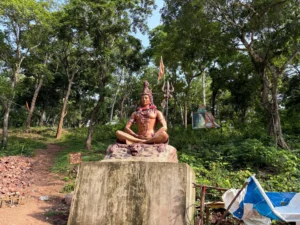
Mythology and Legends of Gupteswar
As you wander through the cool and damp caves, the legend and mythology surrounding this shrine fits in so well here.
The stories and folklore about this natural cave are as fascinating as the deity itself:
Lord Rama’s Pilgrimage
Lord Rama and his wife Goddess Sita and Lakshmana reportedly spent the major part of their 14 years of exile in the thick forest of Dandaka-arkaayshe and Lak, which are part of Ramagiri hills. Lord Rama found this natural cave and well-acknowledged idol of Lord Lingam inside the same.
The Vanishing Idol
The ordeal said by the local tribals is about a tribal hunter who discovered the cave when he was hunting for wild deer. The hunter tried to touch the stone pillar (Lingam) stored inside the cave but suddenly it disappeared into the floor of the cave. The pillar was back after the villagers said the prayers and it gained its worldish name, ‘Hidden Lord’.
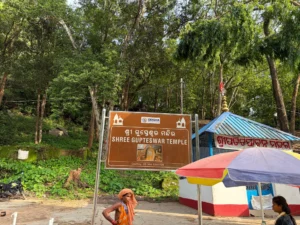
Architecture and Cave features
As you explore the cave complex, you will encounter some gorgeous natural formations which have been improved upon to leave the magnificent shrine seen today. As you glance to your right, you will observe how the cave’s scenic grandeur has been exploited in the service of this resplendence.
The Approach
The lost flight of stone steps spirals its way up the hillside and then opens out into a natural cave opening.
The Interior
Just a short rocky passage leads you into a cave where a big hall-like area inside is lit by interior lights and some oil lamps with brass shades hang from the walls.
Lingam
The most important thing to see in the cave is the naturally grown stalagmite lingam which is almost 2 meters high and 3 meters wide. Water droplets come down from the cave’s ceiling offering continuous Abhisheka to God.
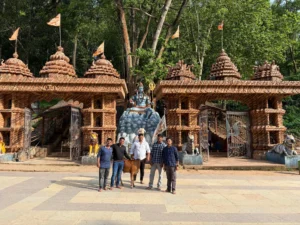
Best Time to Visit Gupteswar temple
You may come here to this cave in Odisha to either see nature from solitude or to join in the yearly Maha Shivratri.
Maha Shivratri Festival
It will be the festival time in the month of Phalguna (February /March) that would turn the cave into a very busy place of worship. Over 1 00 000 devotees, sadhus, and tribal people gather here to pour holy water from the Shabari river to the deity.
Winter Season
For a comfortable temperature of 12°C to 25°C, the period October to February is the most suitable for visiting the cave.
How to Reach Gupteswar Shiva Temple?
Your travel adventure to this natural cave begins with a scenic drive through winding roads flanked by teak forests and mountain streams.
Here is some information about the different modes of transport to reach the cave shrine:
By Road from Jeypore and Koraput
Jeypore is the nearest town situated at around 55 km from this natural cave. You can rent private taxis for the ride and it will cost you roughly 1800 – 2500 rupees for a round trip. For scooter rental, the charge is 500 rupees per day. Government buses starting from Jeypore bus stand head towards Baipariguda town from where you can hire an auto-rickshaw (200-300 rupees) and get to the cave easily.
By Train
Jeypore Railway Station (JYP) and Koraput Junction (KRPU) remain among the closest train stations that are well connected to Visakhapatnam and Bhubaneswar trains.
By Air
The nearest airport to the cave is Visakhapatnam Airport (VTZ) located roughly 240 km away. For a wider outdoor perspective, our mountain retreat travel guide provides additional ideas for an active itinerary.
Nearby Attractions
Once you have explored this cave complex, take a break and enjoy the warm sunshine, and spend some time discovering the natural beauty of the surrounding areas.
Entry Timings and Fees
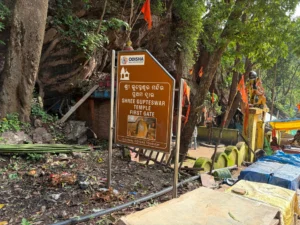
The Gupteswar Cave Temple opens early in the morning at 06:00 AM and remains open until 01:00 PM. After a midday break, it reopens at 03:00 PM and continues until 07:00 PM. There is no entry fee to visit the temple, making it accessible to all devotees and travelers. However, you will need to remove your footwear before climbing the stone steps, and a shoe storage facility is available at the base for a nominal charge of ₹10 per pair.
Dress Code and Temple Etiquette
As this is an active place of worship, modest clothing is expected. Both men and women should wear clothes that cover shoulders and knees. Since the cave interior can be cool and damp, carrying a light shawl or stole is advisable. Photography is generally allowed in the outer areas and approach paths, but it may be restricted inside the main sanctum. Always ask the temple authorities before taking photos of the deity.
Physical Requirements
The approach to the cave involves climbing a long flight of stone steps carved into the hillside. While the steps are well-maintained, they can be steep and tiring for elderly visitors or those with knee problems. The cave floor is made of granite stone and can be slippery due to water dripping from the ceiling. Wear footwear with good grip until you reach the shoe deposit point.
Facilities Available
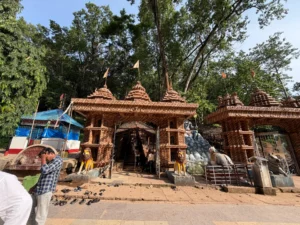
Basic facilities including drinking water and restrooms are available at the base of the hill. Small shops selling prasad (religious offerings), flowers, and refreshments operate near the entrance. During Maha Shivratri, temporary facilities and medical aid stations are set up to accommodate the large influx of pilgrims.
Nearby Attractions around Gupteswar
You may take pleasure in the natural beauty of the area through some of these ideas:
Shabari River Bank
Just an easy stroll from the cave entrance, this serene river is the perfect place for you to relax on the smooth granite rocks, cool off in the refreshing river water, and observe the wildlife around – mostly birds.
Ramagiri Forests
Nature trails are easily accessible in these thick forests. You can explore, organize a picnic, or do birdwatching all at the same time.
Kolab Botanical Garden & Dam
This attraction, consisting of a manmade lake, flower gardens and boating facilities, is the place people come for relaxation and picnic. It is located 45 km from the cave on the way to Koraput. The dam is one of the main scenic spots.
Is the cave interior easy to explore for senior citizens?
If you are concerned about whether the interior of the cave is easy for senior citizens to navigate. Although the cave is well-lit and the floor is made of granite stone, the way to the cave entrance consists of a long flight of stair climbing stone steps. Senior citizens and those suffering from very serious knee problems might want to stay away from the steep climb.
What are the timings for visiting the shrine?
After opening at 06:00 AM, it will stay open until 01:00 PM only to reopen at 03:00 PM and close by 07:00 PM in the evening.
Is there an entry fee or shoe storage facility?
It is absolutely free to set foot in the temple. Though, visitors have to pay 10 a piece for the shoe storing facility at the base of the hill which is also the place where you take your shoes off before entering.


