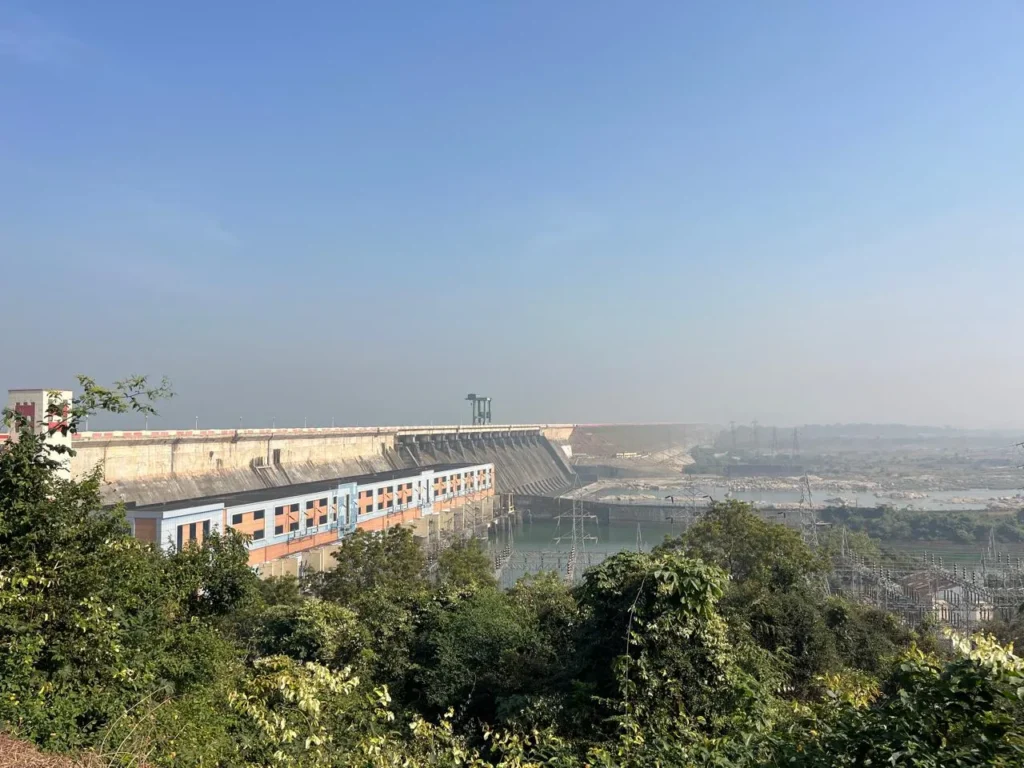
Hirakud, a huge water body is about 15 kilometers away from the main town of Hirakud dam Sambalpur. The sun shines back brightly through the surface of the Hirakud reservoir to the extent that you have to look away just to see the horizon. If you climb up the Gandhi Minar, the water appears to be endless. It is a place where the smell of the earth, wet and dry grass, is very strong. This is not a mere cement wall; it is the soul of the whole Western Odisha. While most people here are captivated only by the “biggest” or the “longest, ” once you are there, you get the impression that the Hirakud dam is really this immense, silent, and unassuming witness to the history of this land.

Table of Contents
ToggleLong before the Hirakud dam was constructed, this place was well known for something very different. The word “Hirakud” means “Diamond Island” quite literally. A very long time ago, prior to the discovery of huge mines in Africa, members of the Jhara diving community engaged in searching the bottom of the Mahanadi river for gold dust and diamonds.
Internally, it is believed that many of the fabulous gems of the world have been found here in these river currents. Hearts know that even today, down under the million gallons of water in the Hirakud reservoir, the riverbed remains a secret of the great wealth of the ancient times. Back in the fifties when the dam was constructed it would have been a Diamond Island forever by water as it has been covered by the dam.


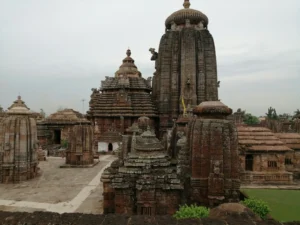
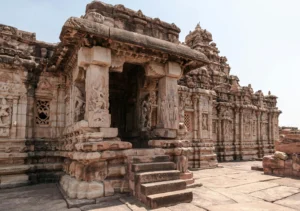
Life of the locals changed radically when the Hirakud dam was built in Sambalpur. About 250 villages disappeared due to the flooding of the area for the reservoir. Besides residential houses, over 200 ancient temples were also submerged. At the peak of summer, when the water level falls drastically, something very scary is witnessed. The rooms of these ancient rock temples slowly come out of the water like stone fingers trying to reach the sky. If you decide, you could get to the temple by boat. It is a quiet, heavy feeling to be standing in front of an old temple that hasn’t been sounded by the bell for seventy years. The locals don’t call it ‘ruins’. They consider it as a kind of sacrifice with a silent respectful gesture.

Hirakud dam is a big mixed structure which means it is a mix of earth, concrete, and masonry. With the inclusion of the dykes closing the low hills, the total length of the dam is about 25.8 kilometers. It is located between the two hills, Laxmidungri and Chandili Dungri. There are Hirakud barrage and sluice gates to control the river Mahanadi, but it is the earthen dam part that makes the dam the longest in the world. By looking at the south, you will be able to see the Samal barrage which is one of the methods of water management for the canals. The scale of the Hirakud bandh is truly beyond comprehension. When you are next to a wall which is holding an entire river, it is difficult not to feel very small.
The Hirakud dam is not just a barricade, it is also a pathway for nature. The reservoir lies on the route of a migratory pathway of birds which even come from Siberia. In winter, the reservoir is the habitat of more than 200, 000 birds. You can spot Great Crested Grebes, Bar, headed Geese among others. If you go to the Debrigarh Wildlife Sanctuary which is at the side of the Hirakud reservoir, you can be lucky enough to see a leopard or a gaur coming down the river for a drink.
A travel article about this region will not be complete if it does not include the “Saree culture” that the dam plays a part in facilitating. The irrigation of the cotton fields by the water from the Hirakud bandh allows the production of the thread that results in the famous Sambalpuri Ikat sarees. The inhabitants don’t use the water only; they even wear it. It’s a lovely cycle of life where the Hirakud dam nourishes the fields, which in turn nourish the looms.
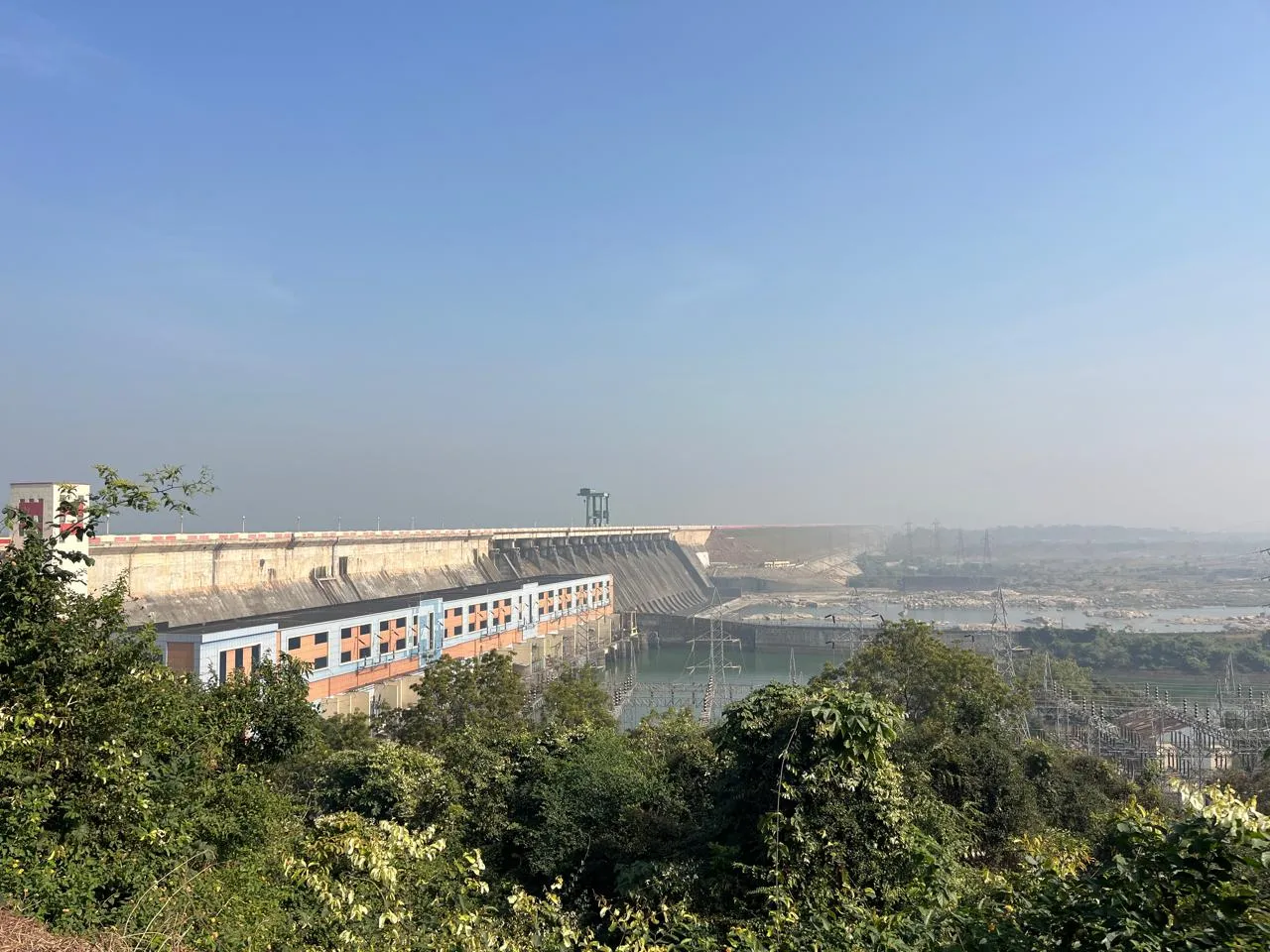


It is a good idea to schedule your visit in between those months. Summer is really harsh in Sambalpur when it comes to the sun, and the rain in monsoon makes the roads very slippery. During the winters, the fog on the Hirakud dam is so thick that one can hardly see his feet in the morning. There is a suggestion from my side that you should go and see the Nehru Minar that is located on the other side of the dam. There will be fewer people. You will see local fishermen who are in very small boats that when looked from the great Hirakud reservoir will seem like only sticks. Their way of moving is very calm and silent while throwing their nets. They are not using engines; they just have an understanding with the water.