The Lingaraj mandir, Bhubaneswar looks like a quiet mountain made of dark stone. When you leave the highway things start to sound different. The noise of the cars gets softer and softer. The air starts to smell like smoke from wood, wet sandstone and dry marigold flowers from the Lingraj mandir Bhubaneswar area. You are not just going into a neighborhood near the Bindusagar tank and the Lingraj mandir, you are going into a special and sacred space, near the Bindusagar tank and the Lingraj mandir. This is the heart of Bhubaneswar, Odisha.
About Lingraj temple
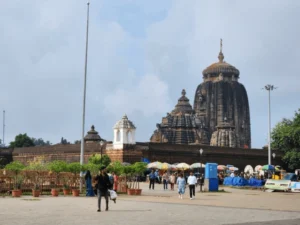
When you are standing at the gate of Lingraaj temple your neck starts to ache. The height of Lingraaj temple is something that the locals talk about with a lot of pride. Lingraaj temple is 180 feet tall which is 55 meters.. These numbers are just things you read about in books. When you are actually standing in front of Lingraaj temple you can really feel its weight. The people who live around Lingraaj temple say that the temple is like an anchor for the whole city. It is very solid. Lingraaj temple has been standing for a thousand years now. It has been through many storms and wars.
History of the Lingraj temple
Who built the Lingaraj temple? The Keshari dynasty constructed it; King Jajati Keshari started the construction of the temple in the 11th Century. The temple was a pillar temple that was built like a fort by the Keshari kings. Many other Hindu temples in the area were destroyed by foreign invaders, while this temple was preserved due to its being hidden behind very high walls. Not only was the temple built for display, but it is also a place of worship. It is a safe heaven where one can worship God.

Ritual of Water and Fire
A constant rhythm is followed in Puja. The rhythm will stay the same throughout time. The priests wake the deity before sunrise. The deity is very different from other deities because he represents both Gods, Shiva and Vishnu. Priests cleanse the stone using the most pristine water from the “Sacred Pool” and then the “Sacred Tank”. After cleansing it, they prepare a meal for the Deities that were cooked in clay pots placed over an open flame using wood that has been aged for many years.
Stone of Living Vimana
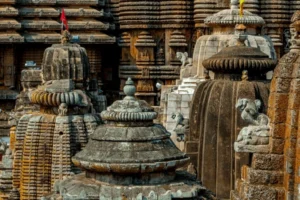
You see the mountains of Vimana represent stories carved into warm, red sandstone. With the changing color of the sun, you are witnessing these stories at the same time. A Deula style building with traditional construction techniques, the Vimana is divided into vertical sections surrounded by deities, the eight Dikpalas who guard the directions.
Alasa Kanyas or the “indolent maidens” of the Vimana, have been portrayed in everyday actions such as using a mirror for grooming or drying their hair. These scenes add life to the massive sandstone. The Gaja-Simha, a lion standing on top of an elephant, is associated with the victory of the spirit over materialism. On the uppermost portion of the Vimana, two deities, the Beki-Bhairavas, have been shown crouching as they are strong enough to support the weight of the sky.
A Sacred Fire of the Temple Kitchen
The Bhoga Mandapa, or Temple Kitchen, is a place for preparing the sacred Mahaprasad using an ancient discipline that continues to be observed in Odisha’s largest temple kitchens. The priests use earthenware vessels placed in direct contact with an open flame, cooking food using vaporization by slowly rising steam. They refuse to use steel or aluminium construction materials.
The ingredients used to prepare the meals are sourced from local farmers and consist of traditional Hora vegetables, namely yam, and some indigenous lentils. As a meal prepared in this manner, have a very sacred view associated with sharing a meal that represents a connection to the Divine energy through an act of eating and sharing; eating on the floor with your hands serves as a reminder of your connection to the earth, which makes you feel connected to the Divine energy.
The Festivals inside the Temple Lingaraj Temple
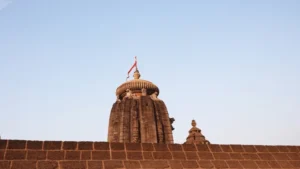
When it is Maha Shivaratri people stay awake at night. They all gather around a lot of oil lamps that are in the courtyard of the temple. The oil lamps make a lot of smoke. This smoke makes the air all hazy. Then at midnight a big lamp goes all the way up to the top of the tower. When Maha Shivaratri people see the big lamp going up into the sky the whole crowd of people cheers loudly. When you are there at Maha Shivaratri you get a feeling it is like you have chills all down your spine.
Things you should know:
The best time to go to the temple is when it is winter. That is from October to March.
Figuring out how to arrive might feel smooth once you understand the route. Reaching Bhubaneswar? Trains or buses handle that well. Closest rail point – Bhubaneswar Railway Station, just 5 km off from the temple grounds. For those on wheels, Old Town Bus Stand serves as the main stop. From nearly any spot in the city, a rickshaw works fine, even better an auto one, to get near the temple entrance.