If you were born in West Bengal or if you’re a Bengali or both, you would know and understand the significance of Mahalaya. Every Bengali household has this one very specific sound tied to Mahalaya during Durga puja time. It’s never an alarm or temple bell but a voice through the radio at four in the morning, reciting Sanskrit as if it’s their mother tongue that most listeners couldn’t translate but can recognise. The familiar voice is Birendra Krishna Bhadra’s. The programme is called the Mahishasuramardini.
What Is Mahishasuramardini?
Mahishasuramardini is almost ninety minutes long. It is Bengali with a mix of Chandipath recitation, devotional songs, and narration, all built around the creation of Durga’s and her fight against the demon Mahishasura.
All India Radio Kolkata first aired it on the Mahalaya of 1931, and unless some form of exceptions, it’s run every single year since, making it. It is one of the longest continuously running programmes in Indian radio history.
The Three Men Who Made It
Bani Kumar
Bani Kumar was born as Baidyanath Bhattacharya. Bani Kumar was the one who wrote and directed the script. He’s the reason the programme feels like an ongoing scripture, narration, and song coming together rather than a basic recitation of the Chandi from start to finish.
Pankaj Kumar Mullick
Pankaj Kumar Mullick composed the music and directed it. This program is built on classical tones but it also has the popular Bengali melody underneath, which is why it is so popular and something people wanted to listen to.
Birendra Krishna Bhadra
Birendra Krishna Bhadra is the voice of the Mahalaya. He recites the Chandipath and his voice becomes so popular, discussing so many groups that most people just assume he was a priest. He wasn’t, in fact he was a singer, playwright, and voice actor. His command over Sanskrit made him very popular. Surprises most people the first time they hear it. Although there was controversy around “non-Brahmin” reciting Durga stotras, but people have not only forgotten this, but they say there is no other way to hear the mahalaya unless from his voice.
Why 4 AM?
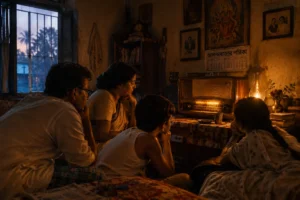
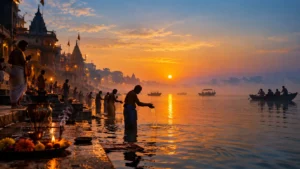
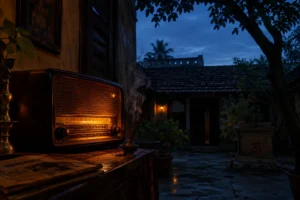
Not arbitrary. The timing tracks the ritual logic of Mahalaya itself, meant to land right before the morning’s tarpan rituals begin along the riverbanks. But somewhere along the way, the reasoning stopped mattering and the habit just… stuck. Families would pull the radio out days early, test it, make sure it still worked. Set an alarm for an hour nobody would otherwise be up for. Before everyone had their own device, there was something almost communal about it, one radio, loud enough that half the lane could hear it through the dark, everyone waking to the same three notes at once, whether they meant to or not.
The Famous Failed Replacement
In 1976, All India Radio decided the programme needed modernizing. So they produce something new, Durga Durgatiharini, aired on September 23, 1976, swapping Bhadra for the biggest film star Bengal had, and swapping out Pankaj Mullick’s music for someone else’s. It flopped. Badly. The backlash wasn’t polite disappointment, it was loud enough that All India Radio ended up issuing a public apology and putting the original back on air. The replacement got demoted to Durga Mahasashthi instead, six days later, rather than touching Mahalaya morning again. The whole episode became famous enough to get its own biopic in 2019, just called *Mahalaya*. Worth being careful here though, this wasn’t some abstract “tradition beats modernity” story. It was one specific, organized wave of public anger, forceful enough to make an institution reverse course inside a single season. [mahishasuramardini, Uttam Kumar]
What’s Actually In It
Opens with an invocation, then moves through Chandipath verses woven between devotional songs. One of the most recognized lines *Ya Devi Sarvabhuteshu* translates roughly to “to the goddess who resides in all beings in the form of shakti, salutations to her, again and again,” with the specific quality attributed to her (shakti, or something else) shifting across the longer verse. *Jago Tumi Jago* means, more or less, “awaken, you awaken” a direct summons to the goddess. *Bajlo Tomar Alor Benu* is looser in translation, something like “your flute of light has sounded,” announcing her arrival is already underway. Narration threads through all of it, building toward the battle itself, then closing on triumph. [ya devi sarvabhutesu meaning, mahalaya song list
Where to Listen in 2026
All India Radio Kolkata still airs it at 4 AM on Mahalaya morning, same frequency it’s always used, and Prasar Bharati’s Akashvani platforms usually stream it live alongside. Official archived versions live on Akashvani’s own channels and on licensed platforms Spotify, YouTube, under proper authorized uploads. A handful of Bengali TV channels run their own Mahalaya specials the same morning too. One honest note worth including: stick to Akashvani, Prasar Bharati, or verified label uploads. A lot of what floats around online isn’t properly licensed, and that’s not a rabbit hole worth going down. [mahalaya 4 am radio, Prasar Bharati].
Chandipath and the Devi Mahatmya
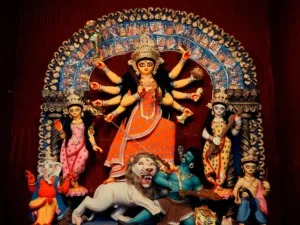
The Chandipath in the broadcast comes from the Devi Mahatmya also called the Chandi, a section sitting inside the Markandeya Purana. It’s one of the foundational texts in Hindu goddess worship, telling the story of Durga’s creation from the combined energy of the gods, and her subsequent battles, Mahishasura being the big one. The broadcast doesn’t read the whole text though it selects and arranges specific passages alongside the songs and narration, which is really why “religious recitation” undersells what it actually is. It’s closer to constructed audio drama than straight scripture reading. [Chandipath, Chandi, Devi Mahatmya, Markandeya Purana
Mahalaya on Television
TV’s had its own Mahalaya specials for decades now actors performing dramatized versions of the story, musical numbers woven in. Purists mostly dismiss these outright, and it’s not hard to see why. None of them carry the weight Bhadra’s version does, partly because that version already earned its place through the very public fight described above. Still, the TV specials aren’t really trying to replace the radio broadcast. They exist next to it as a visual entry point for younger viewers who wouldn’t otherwise sit through ninety minutes of audio alone.
Why It Still Matters
What’s actually remarkable is how little this has had to change to stay relevant. Bengali families abroad stream the same broadcast now, whatever hour it happens to land in their time zone, sometimes gathering on a video call just to listen together. WhatsApp groups start lighting up at 4 AM the second it begins voice notes, reminders, the whole thing functioning almost like a shared alarm clock stretched across an entire diaspora. Nearly a hundred years since it first aired, and it still does something almost nothing else manages: pulling an enormous, scattered community into the same three minutes of sound, at the same exact moment, every single year without fail. [mahalaya, Devi Paksha].
Frequently Asked Questions
Who is Birendra Krishna Bhadra?
A Bengali broadcaster, playwright, and voice artist who recited the Chandipath in Mahishasuramardini from its early years, becoming inseparable from the programme despite not being a priest.
What time does Mahishasuramardini air on Mahalaya?
Traditionally 4 AM, broadcast on All India Radio Kolkata and streamed via Akashvani/Prasar Bharati platforms.
When was Mahishasuramardini first broadcast?
In 1931, on All India Radio Kolkata, making it one of the oldest continuously running programmes in Indian radio.
Who wrote and composed Mahishasuramardini?
Bani Kumar wrote the script, Pankaj Kumar Mullick composed and directed the music, and Birendra Krishna Bhadra narrated the Chandipath.
How long is the Mahalaya broadcast?
Approximately 90 minutes, combining scriptural recitation, devotional songs, and narration.
Why was the Uttam Kumar version of Mahalaya rejected?
Listeners reacted so strongly against the 1976 replacement that All India Radio issued a public apology and restored Bhadra’s original version.
Where can I listen to Mahishasuramardini online?
Through All India Radio’s live broadcast, Akashvani/Prasar Bharati streams, and licensed uploads on platforms like YouTube and Spotify.
What does Ya Devi Sarvabhuteshu mean?
“To the goddess who resides within all beings in the form of shakti” a repeated verse offering salutations to the goddess in her many forms.