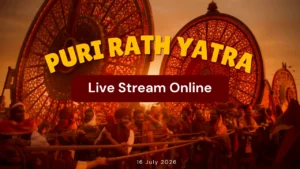
Snana Purnima is the ceremonial bathing of Lord Jagannath, Balabhadra, and Subhadra, performed on the full moon day that falls several weeks before the main Rath Yatra procession on 16 July 2026. Temple priests carry the deities to a public bathing platform where they pour scented water over each idol as devotees gather to watch. Following this bath, the deities traditionally withdraw from public view for a period known as Anasara, before re-emerging for the main procession. This ritual marks the formal beginning of the annual Rath Yatra cycle, distinct from the procession itself. This article explains what happens during Snana Purnima and how it connects to the wider festival calendar.
Attending Snana Purnima gives visitors an early opportunity to see the deities before the main crowd of 10-20 lakh devotees arrives for the procession. The Rath Yatra Puri 2026 travel guide situates this ritual within the complete festival calendar, and the sections below detail its specifics.
Table of Contents
ToggleWhat Happens During the Snana Purnima Ritual?
Snana Purnima involves temple priests carrying Lord Jagannath, Balabhadra, and Subhadra to a public bathing platform, where they pour water mixed with fragrant substances over each deity in view of gathered devotees. This public bathing represents one of the few occasions the deities appear openly before the procession itself. The ritual takes place on the full moon day of the Hindu month of Jyeshtha, several weeks ahead of the 16 July 2026 main event.
What Is Anasara and Why Does It Follow the Bath?
Anasara is the period following Snana Purnima during which the deities withdraw from public view, traditionally explained as a time of illness or rest after the ceremonial bathing. Temple priests keep the deities behind screens during this period, repainting and refreshing them before their reappearance for the main procession. Anasara typically lasts about two weeks, ending shortly before the Rath Yatra festival begins.
How Does Snana Purnima Connect to the Main Procession?
Snana Purnima connects to the main procession as the formal opening ritual of the annual Rath Yatra cycle, setting the religious calendar in motion weeks before the chariots move. Devotees attending both Snana Purnima and the 16 July procession experience the complete arc of the festival, from the deities’ public bath through their journey down Grand Road. This connection makes Snana Purnima a meaningful addition for visitors with extra time in their travel schedule.
Key facts about Snana Purnima include:
- Takes place on the full moon of the Hindu month Jyeshtha
- Occurs several weeks before the 16 July 2026 procession
- Followed immediately by the Anasara withdrawal period
- Marks the formal opening of the Rath Yatra religious calendar
| Ritual Stage | Timing Relative to Main Procession |
|---|---|
| Snana Purnima | Several weeks before 16 July 2026 |
| Anasara withdrawal | Approximately two weeks following the bath |
| Main Rath Yatra procession | 16 July 2026 |
Placing This Ritual Within Festival History
Snana Purnima’s continued observance reflects the same historical tradition responsible for the festival’s centuries-long continuity. history and significance of the Jagannath Rath Yatra traces how rituals like this one have persisted through generations of temple practice.
Can visitors attend Snana Purnima and the main procession during the same trip?
Yes, though the two events fall weeks apart, requiring an extended stay or a second visit to attend both.
Do the deities remain visible throughout the Anasara period?
No, the deities withdraw behind screens during Anasara, remaining out of public view until shortly before the main Rath Yatra procession.
Confirming the Exact 2026 Date for Snana Purnima
Checking the specific 2026 calendar date for Snana Purnima helps visitors plan a trip around this early ritual alongside the main procession. key dates and schedule for Puri Rath Yatra 2026 lists this and every other major date across the full festival cycle.