
- Varanasi
The Fire and the River: A Definitive Guide to the Ganges Aarti of Varanasi
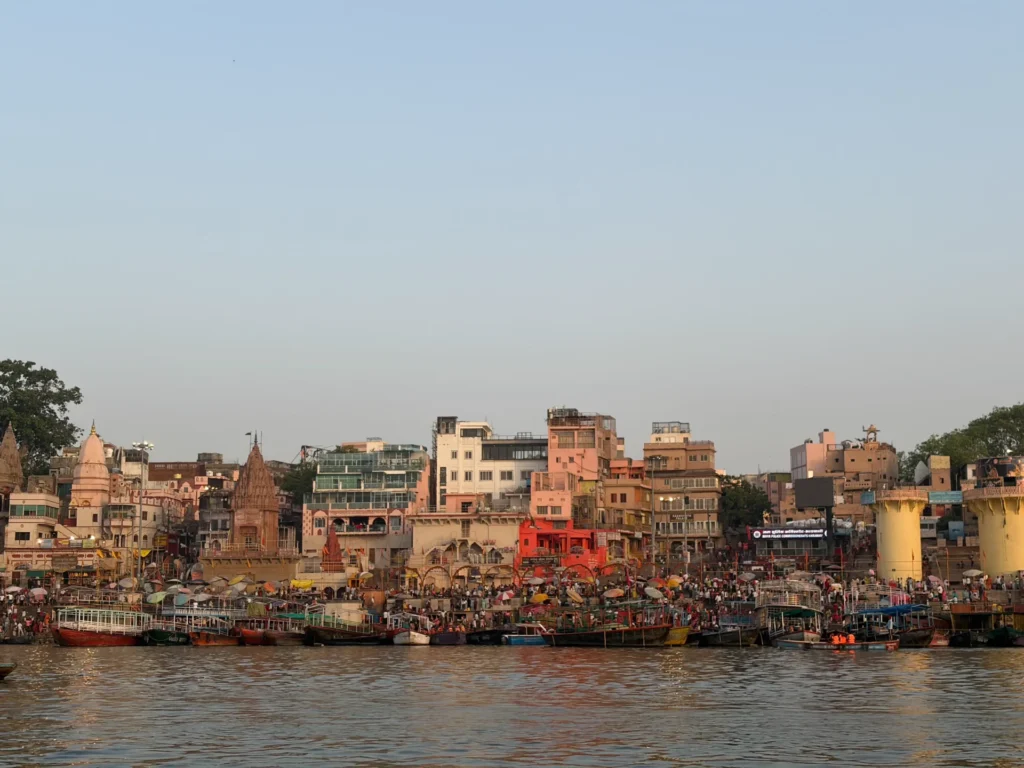
Camphor burning, sandalwood incense, and crushed marigold petals layer the air thickly as you sit on the old stone steps of Dashashwamedh ghat, surrounded by hundreds of locals and travelers from around the world. A loud blast from a conch shell pierces through the constant din of people and at that moment, everything comes to a stillness at the banks of the Varanasi Ganga.
The evening prayer, called Aarti, is much more than just a spectacle for tourists to photograph, it is truly a sensory explosion of pure love from all who participate. The Aarti has been a part of the spiritual life in Kashi for centuries, and if you are planning to attend, it is imperative that you understand how to navigate the logistics of this nightly event to capture all of its true enchantment.
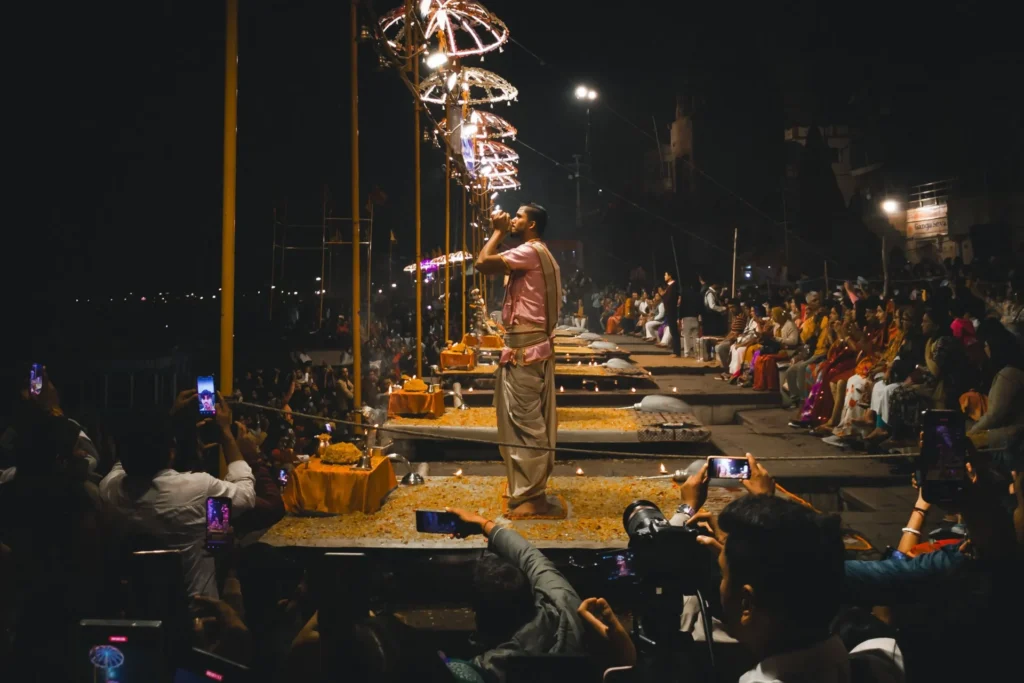
Dashashwamedh Ghat – the epicenter of the evening Aarti ceremony
Many sites along the river have small Aarti ceremonies every night; however, the grandest and most recognized ceremony is held at the steps of the Dashashwamedh Ghat on the banks of the Ganga River. This ceremony is considered the best Ganga Aarti in Varanasi because of its size and precision.
The Ritual Unfolded
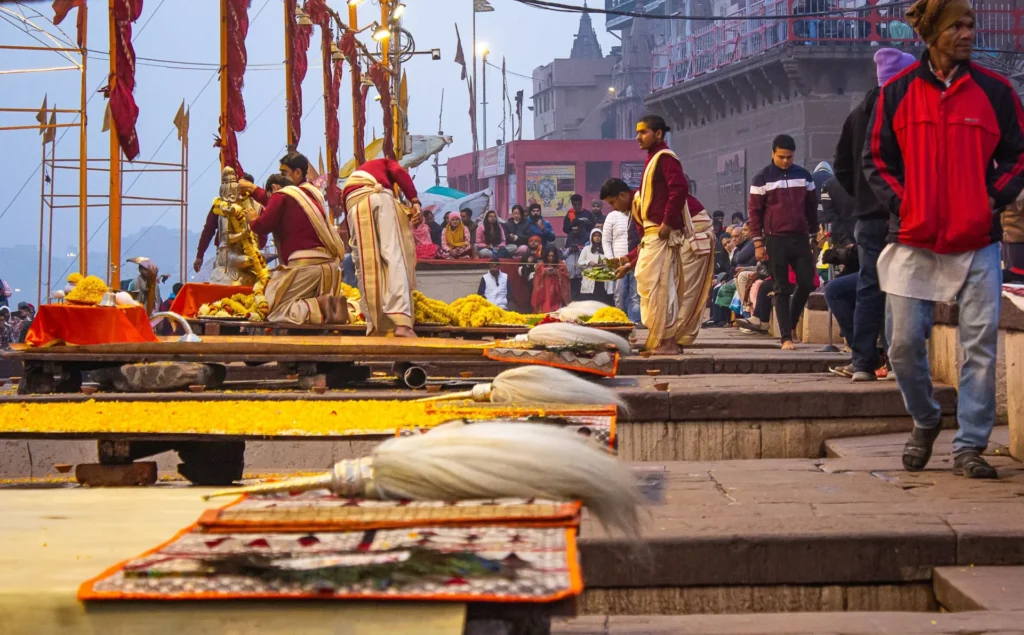
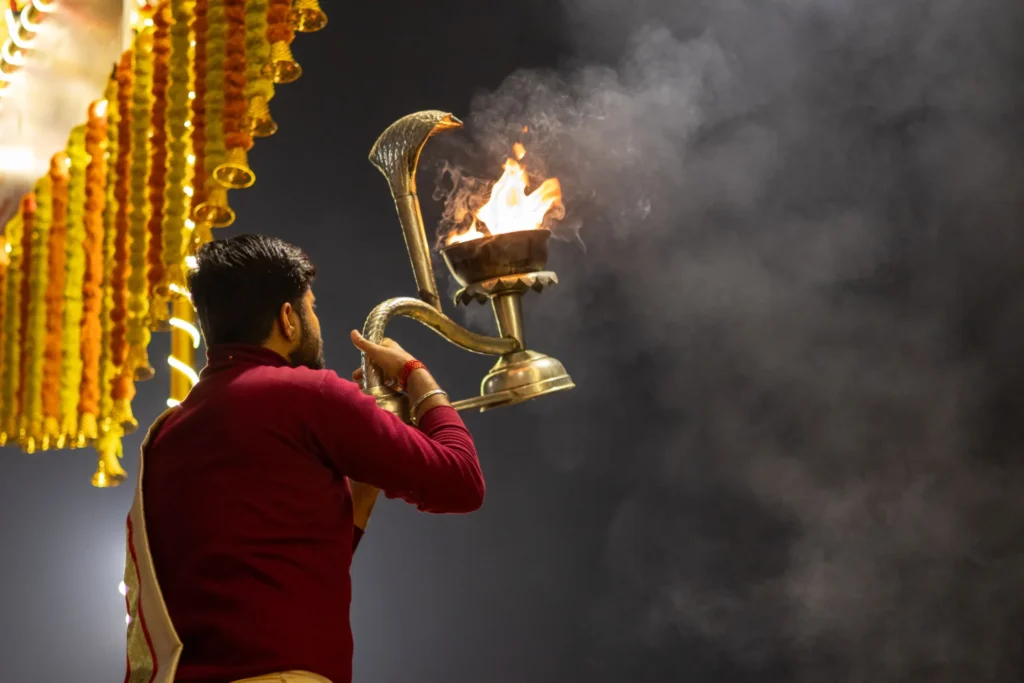
The ceremony lasts for 45 minutes and features 7 priests dressed in saffron robes and positioned on raised wooden platforms along the water’s edge. The priests are positioned to perform a very coordinated dance or “cosmic dance,” collectively moving large 4-tiered brass oil lamps in circular motions towards each of the four directions.
As the priests perform the ceremony, the sound of heavy brass bells, brass gongs, and thousands of people chanting in unison creates a rhythm that is felt in the air. The look of the large columns of golden fire cutting through the darkened riverfront is enough for you to get goosebumps.
Understanding the Timing Loop
Timing is important for Ganga Aarti timing because ritual timing of Ganga aarti shifts with time based on the movement of the sun throughout the year. The priests conduct the main prayers immediately after it is dark, and this can change significantly throughout the summer and winter months.
Summer months: (April – September) Ganga Aarti time in Varanasi will occur later in the evening during summer because the sun stays up longer. You can expect the first conch shell blast to happen around 06:45 PM.
Winter months: (October – March) Ganga Aarti time in Varanasi will occur earlier because it gets dark earlier in the evening. Therefore, you can expect it to happen approximately 05:45 PM
If you are trying to schedule your daily sightseeing plans around your Ganga Aarti viewing, it is best to ask your guest house manager or a local boat operator about Varanasi Ganga Aarti timing to be sure to arrive before the beginning sounds of the gongs because there may be unexpected delays in traffic to get there in time.
Choosing Your Perspective: Boat vs. Ghat Steps
The way you sit impacts how you feel about each experience. The two angles you can sit at have their own individual benefits and totally different visual stories.
The Ghat Step Perspective (The Grounded Devotee)
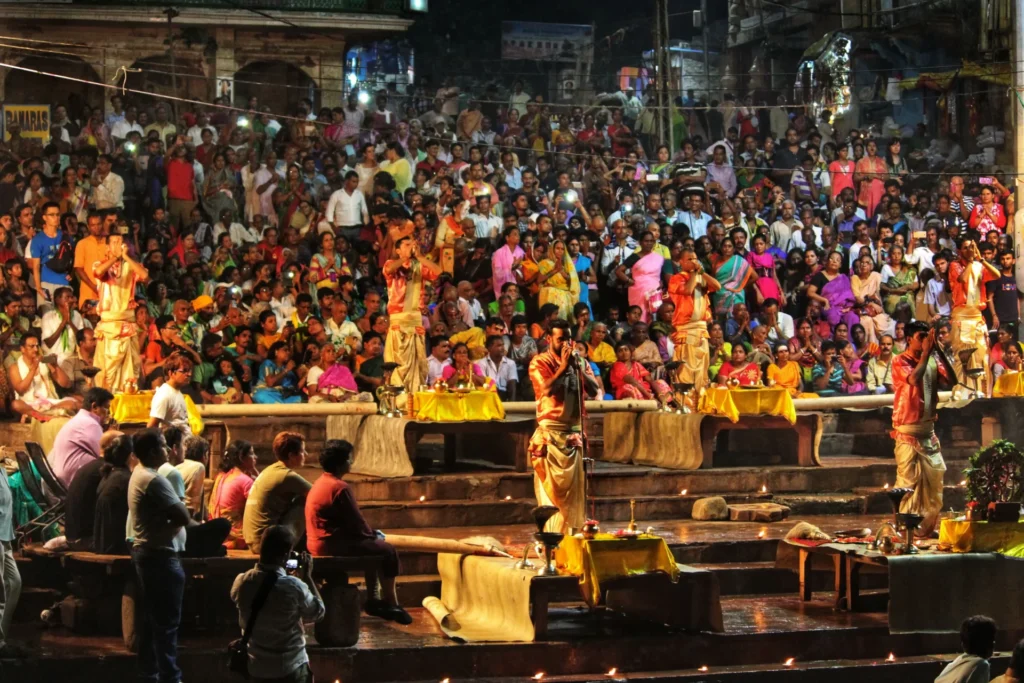
Sitting as low as possible on the stone steps allows you to become part of the electric, raw energy of the local community. You can feel the intense heat of the burning brass pots on your skin; inhale the thick, sweet smoke and clap along with the crowd to the Sanskrit chants.
- Cost: Sitting on the open steps is free of charge; however, you will find local merchants who sell you a plastic chair or a spot on a raised wooden ledge for between ₹50 to ₹100.
- Insider Tip: If you want a clear view of the stones and a prime spot, then be there 45 to 60 minutes prior to Ganga Aarti time.
The Boat Perspective (The Floating Spectator)
Choosing to hire a traditional wooden boat allows you to sit on the water giving you a great view of the priests facing the holy river.
- Shared Motor boating → The best budget option for boating in Varanasi is to use a shared motorboat. A ride on a shared motorboat costs between ₹100 to ₹200 per seat.
- Private Rowing Boat → You will want to hire a private hand-rowed rower for around ₹1,500-₹2,500 for a truly unique experience; please remember to confirm with your rower that he will anchor his boat directly in front of the main platforms prior to the Dashashwamedh ghat Aarti time.
Getting Around the Riverfront: Transport Tips and Logistics
If you are located in one of Varanasi’s bohemian neighborhoods south of the river (the Assi Ghat to Dashashwamedh Ghat distance), you’ll have no trouble navigating a four-kilometre path along the winding banks of the river. It’s a spectacular way to document the city in the late afternoon because you can do it all on the same continuous stretch of stone steps in approximately 45 minutes.
Instead of walking, you can take a scenic, one-way motorboat ride from one of the main transportation hubs early in the morning or later in the evening for approximately ₹200. If you’re travelling via one of Varanasi’s eco-friendly e-rickshaws, you’ll pay between ₹30 to ₹50 and will be dropped off at Godowlia Crossing, from which it will take you about 10 minutes to walk to the water.


Is there a dress code for evening prayer?
Although there is no enforcement by the institution at the open-air steps, the event is very sacred. Be respectful of the local culture and dress modestly. Keep your shoulders and knees covered; it is customary for both men and women to use lightweight cotton shawls or Dupatta to cover their clothing.
Does Evening Prayer still occur during the heavy monsoon season?
Evening Prayer has never been canceled due to being moved away from the lower steps on the Dashashwamedh Ghat due to flooding. When the river floods in the rainy season the priests relocate the evening prayer platforms up to higher concrete balconies and on the rooftops. During these weeks, it is unlawful to view the water from boats because of dangerous current conditions.
How do the morning rituals differ from those in the evening?
In the evening, the fire ceremony is performed in front of many people, with lots of energy and lots of cheering. However, in the mornings, the fire ceremony (Subh-e-Banaras) is only performed in front of a small number of people on Assi Ghat at 05:00 AM, and it is a more peaceful fire ceremony, with beautiful music played by local musicians as the sun rises over the river.

The Fire and the River: Guide to the Ganges Aarti of Varanasi
Best Time to visit Varanasi: Month wise guide

The Soul of India: The Ultimate Varanasi Travel Guide
10 Best places to visit in Keonjhar

Best Time to Visit Jagannath Temple: Seasonal Guide for Tourists

The mythological and spiritual significance of maa Mangala temple

10 best Places to Explore in Koraput
Chandrabhaga Beach Puri: A Comprehensive Travel Guide
North vs. South Indian Temples: Architectural Differences and Importance

FOLLOW US


