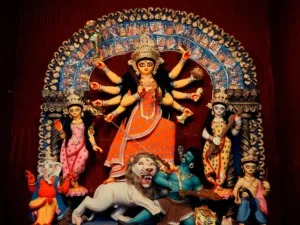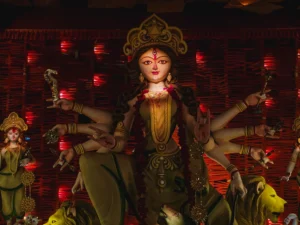
Long before the first pandal lights go up, Durga Puja is already underway in a narrow lane by the Hooghly river called Kumartuli. This is where generations of artisan families hand-build the clay idols that end up at pandals across Kolkata and, increasingly, shipped abroad. A visit here is less about crowds and more about craft, and it’s one of the few Durga Puja experiences you can genuinely have outside the festival rush.
What Is Kumartuli

Kumartuli (literally “potters’ quarter”) is a centuries-old artisan colony in North Kolkata where families of idol-makers, or kumars, build Durga idols from straw-and-bamboo frames layered with river clay. The same workshops also produce idols for Kali Puja, Saraswati Puja and other festivals throughout the year, but Durga Puja is by far their busiest and most important season.
Best Time to Visit
This is the one part of Durga Puja tourism where timing works backwards from everything else. The workshops are at their most active in the weeks before the festival, from around late August through mid-September, when idols are in every stage of construction — bare bamboo frames, clay work in progress, painting, and the final chokkhu daan (eye-painting) ritual that is believed to bring the goddess to life. Visit during the festival itself and you’ll find most workshops closed, with the artisans either resting or already engaged at the pandals they’ve delivered to.
What You’ll See
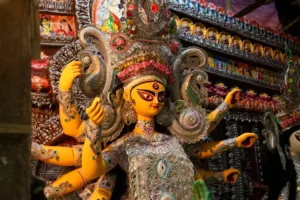
Beyond the idol-making itself, look out for daker saj — the ornate silver-and-gold filigree decoration style, originally imported from Germany by post (“daak”), that distinguishes higher-end traditional idols. Many workshops still layer this by hand onto the goddess’s crown and jewellery. Some of the larger studios also work on export orders, building smaller idols destined for Durga Puja celebrations in London, New York and Dubai.
Visiting Respectfully
- These are working studios and family homes, not a museum — ask before photographing an artisan directly at work.
- A small tip or buying a small clay item is appreciated if a workshop owner takes time to explain their process to you.
- The lanes are narrow and often muddy near the riverbank; comfortable, closed footwear is worth it.
- Early morning light (7–9am) tends to work best for photography, before the lanes get busy with deliveries.
How to Get There
Kumartuli sits close to the Sovabazar-Ahiritola Metro station on the Blue Line, making it an easy add-on to a North Kolkata Bonedi Bari day. Most visitors combine a Kumartuli morning with an afternoon in the nearby Sovabazar and Shobhabazar heritage houses, since both are within a short walk or auto ride of each other.
Frequently Asked Questions
Is Kumartuli worth visiting during the actual Puja days?
Not really — most idols have already left the workshops by then. Kumartuli is best visited in the weeks leading up to Durga Puja, when the making process is in full swing.
Do I need a guide to visit Kumartuli?
It’s walkable independently, but a local guide adds real value here — explaining the daker saj tradition and introducing you to workshop owners who might otherwise be too busy to talk to a passing visitor.
Can I buy a small idol or souvenir at Kumartuli?
Yes, many workshops sell smaller decorative clay pieces and figurines suitable for travel, separate from the large festival idols.