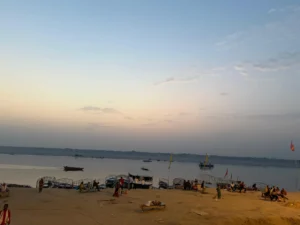
The time is exactly 4:30 a.m. The moment I stepped out of the peaceful guest house, walking on the stone pathways of Kashi. I found the city bathed in a cool, liquid blue. The air carries with it the humidity of fresh flowers, damp river clay, and the sweet scent of boiling cardamom tea. Down below, the old river flows quietly, unseen and unheard under a blanket of mist.
Suddenly, the damp air was pierced by the loud sound of the conch shell which reverberated from the walls of the riverbank. As the sound recedes, a group of students starts chanting the extremely ancient verses of Vedic hymns in unison.
You are not simply awake early for photography; you can jump into the soul of Kashi. The morning ceremony called Subah e Banaras is not merely an event but also a spiritual revelation with multiple sensory experiences. Having spent many mornings sitting on the cold stone steps, I can tell you that this is the best way to start your exploration of the holy city.
What is Subah e Banaras?
If you are planning your first visit to the Kashi temple you may think: What is Subah-e-Banaras? In simple words “morning of Banaras” is a special cultural program which was initiated for the purpose of preserving the living heritage of the city as well as celebrating it.
The ceremony starts with Brahma muhurta which is the time before dawn when the first sun rays are seen. There are five elements connected to the program:
- Vedic Hymns: Young priests chant mantras from the Rigveda to cleanse the environment.
- Morning Aarti: Fire offerings are presented in front of Mother Ganga.
- Vedic Yagya: Performing a fire ritual to bring peace and harmony to every living being.
- Classical Music: Listening to live classical Hindustani music by famous sitarists/vocalists/flute players, as day breaks.
- Community Yoga: Outdoor session of breathing exercises and meditation to connect the mind and body.
Logistical Blueprint: Place, Schedule, and Access
Arranging your journey in advance is important since this way you can benefit from the unique light before dawn, while you are in the traffic.
Location of Subah e Banaras
To find out the location of the event, you will not have to make any effort. Subah e Banaras is held on the broad stone terraces of the Assi Ghat, located at the extreme southern point of the riverfront. Unlike the central parts of Banaras, where the road, in a way, is blocked for these vehicles, the taxi or auto-rickshaw can bring you to the stone terrace only about 50 meters from the conch shell statue at the main entrance.
Timings of Subah e Banaras
The timing of Subah e Banaras varies according to the seasons:
- Summer Schedule (from April till September): The beginning of the ceremony is at 5:00 AM.
- Winter Schedule (from October till March): The time is changed as it starts at 5:45 AM.
To be on the bottom stone stairs, you should arrive about 20 minutes before the signal made by the conch shell.
Step-by-Step Instructions for Attending Subah e Banaras
With a few simple steps, you can be assured of a perfect early morning event at Subah e Banaras:
- Step 1: Get Up Early: Make sure to set your alarm for 4:15 in the morning.
- Step 2: Dress Modestly: You should wear simple clothes that cover your knees and shoulders. Also, it would be good to have a cotton shawl to keep you warm.
- Step 3: Arrive at Assi Ghat: Take an e-rickshaw that costs around ₹50 to reach the southern plaza.
- Step 4: Take Your Place: If you wish to sit on the elevated platform near the stage, remove your shoes first, or choose any of the open stone steps.
- Step 5: Enjoy the Show: Listen to the fire offerings as they begin. You can join in the yoga session following the music.
Is Subah e Banaras Free?
As expected, many first-time visitors would like to know whether there are any charges for Subah e Banaras. Yes, all the programs at Subah e Banaras including the Vedic recitation, musical concerts, and yoga classes, are absolutely free. For transport planning, our Delhi Agra Jaipur transport covers the connections between the main circuit cities.

Best Time to Visit Subah e Banaras
November to March is considered to be the best period for visiting Subah e Banaras. The period between those two months witnesses the rise of a mystery fog above the river owing to which the people of Banaras see the sunrise through the layer of fog produced between the river and the sun. The temperatures in spring months of February and March are perfect for enjoying open air.
The Core Rituals: Aarti and Yoga
Subah e Banaras Morning Aarti Ritual
The morning aarti of Subah e Banaras is an exquisite feast for the eyes. As five priests dressed in golden clothes lift heavy brass oil lamps filled with burning camphor before the river, the priests perform synchronized circular movements.
For the purpose of witnessing how priests conduct their movements against the morning sunset, it is important to know the time for the aarti ceremony. The time of the aarti, which usually begins at 05:00 AM in summer or at 05:45 AM in winter, helps you understand the schedule of the whole month.
Yoga at Assi Ghat Varanasi
Once the classical music sessions are done, local yoga practitioners invite everyone to take part in the large yoga session at Assi Ghat Varanasi. Breathing techniques (Pranayama) or simply stretching while looking at ordinary boats floating by in the sunlight creates a wonderful atmosphere.
What if it rains during the event?
During the monsoon season (July to September), there are cases of the bottom terrace of the Assi Ghat being flooded by rising waters of the river. During this time, morning events and yoga classes are being held on the covered terrace and indoors just above the main square.
Can I take a morning boat ride right after the program?
Absolutely. You should get off your yoga mat by 6:30 AM and you are likely to get a boat right away. A private boat trip for an hour costs about 400-600 rupees, and you will be sailing upstream in your boat while the city wakes up.
Are photography and videography permitted during the ceremony?
Yes, photography is fully allowed throughout the event. However, out of respect for the priests, performing artists, and meditating bathers, avoid using intrusive flash lighting or blocking the sightlines of devotees sitting on the lower steps.