
As you leave the main road that connects the university campus, the sun shines bright through tall neem and banyan trees. The tumult of motorbikes and people makes way for the peaceful presence of chirping monkeys and the constant invocation of “Sri Ram, Jai Ram, Jai Jai Ram.”
You reach your destination, Sankat Mochan Temple, which translates as “Lord Who Frees Us from Our Troubles.” In comparison to the narrow corridors of sandstone of the old riverfront, this serene site sits in the middle of green trees. People have been visiting the temple for centuries to free themselves from the worries of life.
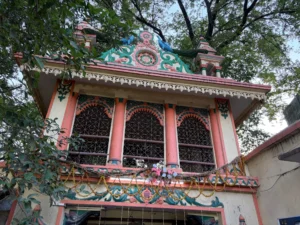
Roots in Faith: History and Spiritual Significance
To comprehend the extraordinary faith found in this place of worship we need to go back to the 16th century, when a great saint poet, Goswami Tulsidas, lived and wrote by the banks of the Ganges River
- Goswami Tulsidas Vision
As per the famous Sankat Mochan Temple history, Tulsidas was doing rigorous penance in the southern river bank when he was bestowed with the vision of Lord Hanuman. Being overwhelmed with devotion, he built a simple mud temple at the actual spot of the vision. This marks the beginning of Tulsidas Hanuman Temple which led to the establishment of the entire modern complex seen today and helped turn the southern forest into a place of divine worship. It is here in this Ramcharitmanas Tulsidas temple that Tulsidas wrote most parts of his famous work, Ramcharitmanas.
- The Architect of Modern Renewal
In the early 20th century, visionary educator Pandit Madan Mohan Malviya built the Banaras Hindu University. He realized the importance of restoring the forest shrine so he undertook the delicate work of restoration that included transforming the courtyard into a beautiful sandstone temple. With his great vision, the Madan Mohan Malviya temple became a true green oasis where nature coexists with grand architecture.
- The Importance of the Shrine
The essence of what makes the Sankat Mochan Temple significance lies in its name. In Hindu mythology Hanuman is known for being a god of protection. People believe that by saying the prayers in this temple one gets instant peace of mind and enough strength to overcome any problems which is why this temple is one of the major sites for people who want to visit Hanuman Chalisa temple Varanasi.
Walking into the Courtyard
Visiting this peaceful place will make you feel how different the pilgrimage can be compared to the lively atmosphere of the riverbank in Varanasi.
- The Living Forest and the Monkeys
As you stroll down the stone paths, you will immediately see why travelers affectionately refer to this location as the Monkey Temple of Varanasi. Numerous macaques live in this area, climbing and jumping freely on the rooftops, tree branches, and marble ledges. Although macaques are viewed as the sacred servants of Lord Hanuman, make sure to keep your belongings safe from theft.
Traveler’s Alert: Do not carry open plastic bags, any food items, or brightly-colored water bottles because monkeys are excellent thieves!
- The Divine Offering
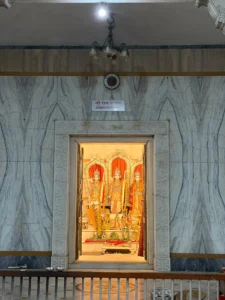
As you come closer to the inner sanctum, you will find yourself in a neat queue behind the devotees with their offerings. Vendors outside sell eco-friendly leaf baskets packed with freshly picked orange marigolds, sweet chickpea flour sweets called Besan Ke Ladoo, and basil leaves for around ₹50 to ₹100. At the altar, you will find the rare statue of Lord Hanuman facing his beloved Lord Rama and covered with beautiful saffron paste (Sindoor).
The southern temple is a key landmark for travels that include a detailed Varanasi Hanuman temple guide. It is conveniently located as the best Hanuman temple near Assi Ghat being only 2 kilometers from the riverside which means 15 minutes walk or a short e-rickshaw ride of ₹30 from there.
Practical Visiting Plan and Festivals
In order to have a fruitful visit, knowledge about time and logistics is very important to navigate through the temple complex.
- Security and Timings
The security of the Sankat Mochan temple is strict yet efficient. Use of mobiles, smart watch, cameras and heavy leather bags is forbidden inside the actual temple complex. You can put your electronics and footwear safely in the free locker counters that are placed outside the main gate.
It’s important to know the opening times of the Sankat Mochan Temple timings to plan your day.
Morning: 05:00 AM -12:00 PM
Evening: 03:00 PM -10:00 AM
The ideal time for visiting Sankat Mochan Temple is early in the morning from 06:00 AM to 08:00 AM. It is during those hours that you will enjoy the fresh weather and will find very little queue waiting. During the holy days of Saturdays and Tuesdays, when the temple is flooded with worshippers, be ready to spend more time in the line.
- The Famous Music Festival
If you happen to travel in the spring, you should visit during the month of Chaitra (last month of spring). During this month, Sankat Mochan Temple holds the famous Sankat Mochan Sangeet Samaroh, which lasts for six nights. The event is attended by famous singers of classical music from all over India, and it is a great chance to experience wonderful music in the open air.
What is the distance between the temple and the railway depot?
The temple is around 7 km from Varanasi Junction (Cantt Station). Outside the train station terminal, you will find the option to hire either an auto-rickshaw (fare of ₹100-₹150) or a mini e-rickshaw which takes about 25 minutes to reach the temple.
Is it permissible for international visitors of non-Hindu faiths to enter the temple?
Yes, international pilgrims of all religions are permitted to visit the location. Just remember to remove your footwear at the entrance counter, dress modestly, and take care of the guidelines regarding mobile usage.
What special food is offered by the temple?
The temple is known for its famous aromatic Besan Ladoo prepared using delicious ghee. You can buy the delicious sweets in boxes from the sweet shop located inside the temple premises at a starting price of ₹100 bringing blessings to your family and friends.


