
Tulsi Ghat in the ancient city of Varanasi is not one of the most calm and surreal Ghat you’ll come across. The first thing that might catch your attention won’t be a huge temple or a crowd, it will be just a few people sitting on the steps with a copy of the Ramcharitmanas in their hands where an old man softly reciting verses. Nobody is noticing anything as everyone is engrossed in their own prayers. Someone pointed me towards a gorgeous, quaint temple and said, This is why people call it Tulsi Ghat.
What’s the story behind Tulsi Ghat?
The story slowly begins to make sense as Goswami Tulsidas is believed to have spent time here. Local people say parts of the Ramcharitmanas were written while he was living near these very steps which is just marvelous, to also be part of the history by just standing here. He would often look at the river, listen to the bells and find peace before putting words on paper.
After hearing that, the place feels different as if every corner seems to carry a memory. I saw a priest arranging flowers outside the temple, various children feeding birds near the water, and a sadhu smiling at people walking past. Nothing extraordinary on its own but together, somehow makes Tulsi Ghat Varanasi truly complete.
As I walked further, I could spot the famous Tulsi Akhada. This place doesn’t feel like a museum or a tourist stop, it looks more like a place that still belongs to the people living here. There are people who still practice traditional wrestling. I heard a person who was talking about the old festivals held every year.
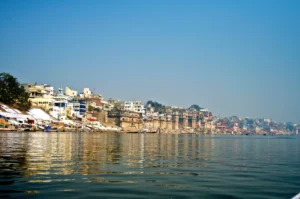
Walking around the temples
After spending some more time by the river, the walk naturally continues towards the temples near Tulsi Ghat. There is the sound of bells coming from somewhere nearby. The priest is arranging fresh flowers outside a small shrine, the whole vibe of this place is so calm and you could feel so close to faith.
A local points towards an old building and mentions the Tulsi Akhada. At first, it doesn’t look very different from the surrounding structures but after hearing its story, the place starts feeling special. It is believed that Goswami Tulsidas established the akhada. Even today, people visit this to feel the connection to the traditional wrestling, devotion and old customs. One more reminder that history here isn’t locked inside books, it also lives in the people, places and most importantly traditions.
The Sunrise and evenings around Tulsi Ghat
As I stood here in the morning, it became more understandable why so many people suggested coming here early in the morning. The first rays of sunlight on the Ganga really heal something in you. Birds flying low over the river while people sit near the ghat. It’s so calm and peaceful, unlike the evenings or afternoons, where it does get a little crowded.
Evening changes the mood without changing the peace. Small lamps begin to appear outside the temples. The sky slowly turns orange and then blue. It gets a little more crowded during this time but still nowhere near as crowded as other famous ghats. That quietness and calmness became the biggest reason to stay a little longer.
Things you need to remember before visiting the Tusli Ghat
Spending time at Tulsi Ghat Varanasi feels more enjoyable when there is no rush. Sitting for a while and watching people instead of looking at the phone was my favourite thing. Listening to conversations between local priests and devotees, also having conversations about the city and the ghat, really makes you more interested about the ghats and the city itself. Small moments that probably won’t appear in any guidebook.
Simple clothes feel more comfortable while walking through the temples and narrow lanes. It’s better to wear some comfortable shoes or slippers that can easily come off as you’ll be entering various temples in the vicinity. For broader destination planning, our Koraput attractions helps place this stop within a Koraput itinerary.
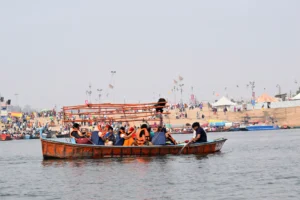
Walking beyond Tulsi Ghat
After leaving Tulsi Ghat, the walk along the river continues almost on its own. Every few minutes, another small temple appears, old staircases leading into a narrow lane. A tea seller calling people over for the first cup of the evening. Children laugh near the water while boats drift past without making much noise.
There isn’t really a fixed route. That’s probably the best part. Every turn brings something unexpected. A painted wall. A small shrine hidden behind old houses. Someone singing a bhajan softly while walking home. Those little moments end up staying in memory longer than most famous landmarks.
Conclusion
Before leaving Tulsi Ghat, one last look towards the river feels almost necessary. The Ganga keeps flowing. People continue reading from the Ramcharitmanas. Temple bells ring once again somewhere behind, life still moves slowly and Peacefully
Maybe that is what makes Tulsi Ghat in the ancient city of Varanasi so special. Not because of grand buildings or large crowds but because it still carries the memory of Goswami Tulsidas in the simplest way possible. Through prayers, through stories, through people who continue to return here every single day, and through people who come here to explore the city, its rich culture and history.
Walking away from Tulsi Ghat, the feeling isn’t excitement. More like quiet happiness. The kind that stays long after the visit ends. A place remembered not for what was seen. But for how it felt.
1. Why is Tulsi Ghat famous?
Tulsi Ghat is famous for its connection with Goswami Tulsidas, who is believed to have written parts of the Ramcharitmanas while living near the ghat.
2. Why is Tulsi Ghat called the Home of Ramcharitmanas?
Many local traditions believe that Goswami Tulsidas composed important sections of the Ramcharitmanas at Tulsi Ghat Varanasi, making it one of the most important literary and spiritual places in Kashi.
3. What is the best time to visit Tulsi Ghat?
Early morning is considered the best time to visit Tulsi Ghat. The weather feels pleasant, the river looks beautiful, and the peaceful atmosphere makes the visit even more memorable.


