Nayagarh is one of Odisha’s least-visited districts, and one of its most underrated. Within about 90 km of Bhubaneswar you’ll find the Mahanadi carving its way through the Satkosia Gorge, one of the state’s few tiger reserves, centuries-old temples, and the scattered remains of four erstwhile princely states. For anyone looking for places to visit in Odisha without the crowds, it’s an easy answer.
About Nayagarh District
Nayagarh is located in the central part of Odisha, in its north Cuttack, in east Khurda and in south Ganjam districts. It’s a total area of 3,890 sq. km having a population of around 960000 approximately as per 2011 census. It was a newly established district in 1993 detached from Puri district which was previously known as one district of Odisha plus Khurda.
The area has been inhabited since the 13th century when King Suryamani, of the Baghela dynasty settled here on a pilgrimage to Puri. Established his kingdom after travelling down Rewa (Madhya Pradesh). Bagel Singh, who reigned from 1480-1510 and was the 9 th king of the dynasty. He moved the capital of Nayagarh and people say is responsible for giving the present day town its name “Baghua Nayagarh”.
Over the years the area was divided into 4 princely states Nayagarh Ranpur, Khandapara and Daspalla, which has left this district scattered temples and palaces and indigenous Odiya traditions. Alongside the remnants of a glorious regal history that is enhanced by 2 major aboriginal tribes: the Savara and the Kandha. Nayagarh is said to have a depth of culture that is rare for an area which is so seldom visited. The district is known across the state of Odisha for its chhena poda-the baked variation of cottage-cheese that many in Odisha will consider to be special to this area.
Best Time to Visit Nayagarh
The best time to experience the charms of Nayagarh is from around late October to mid-April, when the weather is more or less moderate and dry. This makes it suitable for activities like the tiger and elephant safaris of the beautiful Satkosia Gorge, visiting the temples, or simply picnicking at nice spots like the Gokulananda picnic spot much more.., without you getting heat stroke or getting drenched by the weather.
How to Reach Nayagarh?
- By air: Biju Patnaik International Airport at Bhubaneswar is the nearest airport to the Nayagarh town by road, approximately 88- 90 km. It is the only practical means to enter the whole district.
- By train: the nearest major railway station is Khurda Road Junction, from which one has road access after getting rail to Bhubaneswar and then Nayagarh district.
- By road: Nayagarh is situated at a distance of about 88-90 km from Bhubaneswar and of roughly 60 km from Khurda, and it can be reached by state highway. Once you are in the district, you are advised to go by personal car or taxi since the temples, waterfalls, and other wildlife viewing spots are far apart and not at all public transport friendly. The majority require special permission or a particular approach route (e.g. the Kuanria Forest Rest House). Some even have to have their permission sought in advance.
Top Temples in Nayagarh
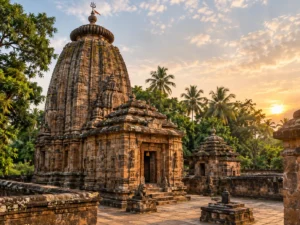
Jagannath Temple, Nayagarh town
constructed in 1788-1808 in Kalinga architecture and the presiding deity worshipped as Dadhibamana. The town is situated in between two hills Rukhi and Balaram.
Dakshina Kali Temple, Nayagarh town
believed to be a living Shakti Peeth, combined with a Gopinath temple approaching it from front, and an ancient matha attached to it.
Ladukeswar Temple (Ladu Baba)
A Shiva temple that still commands a strong regional following far beyond alludes to their popularity in the Nayagarh district itself.
Raghunath Jew Temple, Odagaon
About 26 km from Nayagarh town, Lords Raghunath Sita and Lakshman. Wooden idols in the temple are kept under a kalash plated with gold. It is believed in local tradition that the noted poet Upendra Bhanja of 17 th century wrote his most famous work Baidehisha Vilas at this holy abode. The temple has great importance and the festival of Ramanavami.
Kantilo Nilamadhaba Temple
one of the ancient Vaishnav temples situated on the banks of Mahanadi flanked by twin hills, has a spring which emerges from under the presiding deity and never stops flowing.
Maa Vaishno Devi Temple, Jamukana Hills
approximately 15 km from Nayagarh town and 10 km from Odagaon, this is only the second Vaishno Devi temple in Odisha (after Rourkela). The goddess is worshiped inside a 180 foot long underground cave by her devotees, featuring an 18 kilogram idol shaped very much like the original Vaishno Devi shrine in Jammu.
Dutikeswar Mahadev
Situated at the foot of Sulia hills, near about 32 km away from Nayagarh, focused on a banyan tree of old standing.
Gokulananda Temple, Sidhamula
A hill top temple situated on the bank of Mahanadi, established by Swami Ram Laxman Dash Maharaja and the center of the entire Gokulananda picnic and tourist destination.
Nature & Wildlife Spots in Nayagarh
Satkosia Gorge / Satkosia Tiger Reserve
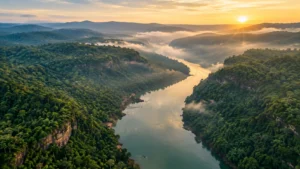
The highlight is the natural features of the district. The width of the Mahanadi river is carved by a fairly steep-sided 40-foot deep gorge through the forested hills. Badamul, on the Nayaragh side, is an important gateway, 90 km from Bhubaneswar by way of Nayagarh town. The Satkosia Gorge Sanctuary, which was established in 1976, and the Baisipalli Wildlife Sanctuary together constitute the Satkosia Tiger Reserve, which is approximately 900 square kilometers in extent. The Tiger Reserve supports tiger elephant crocodiles and gharial (a species of crocodile with a fish-eating narrow snout) Tikarpada, at the perimeter of the reserve, has established a separate gharial conservation area since 1975.
Baisipalli Wildlife Sanctuary
It is entirely situated inside Nayagarh district, it has an area of 168. 35 square km. It is surrounded by Satkoshia for the most part. It covers dry Sal forest. The sanctuary is home to elephants, leopards, bears, sambar and spotted deer, king cobra, python etc. The sanctuary is surrounded by other forests for the most part.
Kuanria Dam
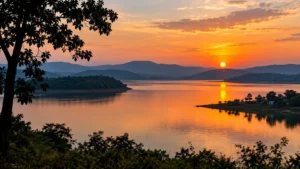
A 1.5 km long by 20m deep reservoir on the Kuanria River, located about 50 km from Nayagarh town and 7 km from Daspalla, surrounded by low blue hillocks. An ideal place to view sunrise and sunset. Nearby are a deer park and a forest rest house (a little prearranged notice from the DFO of the Mahanadi Wildlife Division is necessary to use the rest house).
Kuturi Deer Park & Elephant Rescue Centre
Administered from Kuaria River, it is within Baisipalli Sanctuary. Established in particular for rehabilitation and rescue of abandoned & injured elephants, it also attracts wildlife enthusiasts.
Waterfalls
Ganthi, Dhauli-Kani, and a group of lesser-known falls and streams around Nayagarh itself including Ratnaganda, Rajgiri, Srabani, Godipalli, Barakanya, and Panikhia Similiare all worth squeezing into a longer trip. Apart from Rana Gandy and a few others, early season after the monsoon is the best time to visit, when the falls are flowing heavily but the access is still relatively easy.
Sunamuhin Dam & Park
A placid lake and park ensemble, a good come-down after the heavier sites of the district, or a fairly relaxed and mildly aromatic picnic sit-down.
Heritage & Royal Places in Nayagarh
Daspalla (Dasapalla)
This is the ex-capital of one of the four minor kingdoms or ‘princely states’ of Nayagarh. Located on the border of the western part of the district, the village features not only temples and ruins of old but also evident traces of indigenous tribes and their settlement.
Khandapara Palace
This heritage spot is tied to the former minor kingdom or ‘princely state’ of Khandapara, which is among the four historic royal centers of the district.
Ranpur Palace
The palace is one of the very few surviving buildings of the royal architecture of the former minor kingdom or ‘princely state’ of Ranpur whose ruins today stand peaceful and silent one of the best calm and serene heritage sites in the district..
Panchupaili Pargana
located about 55 km from the Nayagarh town, at the confluence of three rivers – Mahanadi, Brutang and Mahanadi is the town of Panchupaili where one finds shrines of Gupteswar, Mahadev, Navagunjara Jiu and goddess, Kalapat Thakurani apart from which, the town enjoys its fair share of cultural celebrations that take place throughout the year.
Dasarathi Museum & Literary Centres, Udayapur
it is a complex consisting of the Banchhanidhi Pathagara, Sri Aurobinda Sangrahalaya and Jadumani Sahitya Sansada all of which were founded in Udayapur village by the well-known Oriya writer, litterateur Dasarathi Pattnaik or as he is popularly known, Dasia Aja. For anyone who happens to be interested in Odisha literature and their culture, this is a must-visit spot which is as far away as one can get from the normal tourist paths.
Nayagarh Itinerary (1-Day / 2-Day)
1-Day Itinerary (temple and town focus)
- Morning: Start in Nayagarh town — Jagannath Temple and Dakshina Kali Temple.
- Mid-morning: Drive to Odagaon (~26 km) for the Raghunath Jew Temple.
- Midday: Continue to the Maa Vaishno Devi Temple at Jamukana Hills.
- Afternoon: Return via Ladukeswar Temple (Ladu Baba).
- Evening: Back in Nayagarh town for a chhena poda stop before heading out.
2-Day Itinerary (adds nature and wildlife)
- Day 1: Follow the 1-day temple circuit above, overnighting in Nayagarh town or Daspalla.
- Day 2 morning: Head to Kuanria Dam (~50 km from Nayagarh) for the reservoir, deer park, and a stop at Kuturi’s elephant rescue centre.
- Day 2 afternoon: Continue into Baisipalli Wildlife Sanctuary and, road conditions and permits allowing, the Badamul entry point to Satkosia Gorge for the Mahanadi gorge views.
- Day 2 evening: Return to Bhubaneswar via Nayagarh town, roughly a 90 km drive.
For a longer trip, add the heritage stops at Daspalla, Khandapara, and Ranpur, or the literary centres at Udayapur. Any of these can extend the itinerary into a relaxed third day without retracing much ground, since most of Nayagarh’s sites cluster naturally along two or three main road routes out from the district headquarters.
Practical note before you go
Several sites here, the Kuanria Forest Rest House, deeper stretches of Satkosia, and parts of Baisipalli involve forest department permissions or seasonal access restrictions. Confirm current entry rules and any required permits directly with the Mahanadi Wildlife Division or the district tourism office before finalizing plans, since these can change and aren’t always reflected in general travel write-ups.
Frequently Asked Questions
1. How far is Nayagarh from Bhubaneswar?
Roughly 88–90 km by road, and approximately 2-2.5 hours given route & traffic.
2. What is Nayagarh famous for?
Quite a bit in the mix: the royal past still represented by four erstwhile princely states (Nayagarh Ranpur Khandapara, Daspalla), the Satkosia Gorge and Tiger Reserve, older temples like Kantilo Nilamadhaba and Raghunath Jew, and on the food side, chhena poda, a form of sweetmeat which is firmly Odisha-based.
3. Is Nayagarh good for a day trip from Bhubaneswar?
Yes, in the case of the temple circuit (Jagannath Temple, Dakshina Kali Temple, Odagaon, and Maa Vaishno Devi Temple) everything can be easily wrapped up in a day. Coming to Satkosia Gorge or Baisipalli Wildlife Sanctuary and reaching back on the same day is a little difficult and it should be better to spend two days.
4. Can you see tigers at Satkosia Tiger Reserve?
Satkosia is a tiger reserve and there are tigers here, but you’ll need some patience and luck to see one, as it is a forested riverine area rather than an open-grassland reserve (tigers can be elusive). Crocodiles and gharials are much easier to spot along the Mahanadi.
5. Do I need permits to visit Baisipalli or Satkosia?
A handful of places can be visited, for example by overnighting at facilities like the Kuanria Forest Rest House, with a permit obtained at the Mahanadi Wildlife Division DFO. Day-hopping to the easier points of access (Kuanria Dam, the deer park) is without complication, but check the rules before embarking, as access policy changes.
6. What is the best time to visit Nayagarh for wildlife?
November to April, cooler, drier conditions offer better access and viewing than the summer/monsoon Period when some roads and river crossings become difficult.
7. Is Nayagarh well connected by public transport?
Local town served by state highway bus from Bhubaneswar. But most of the temples, waterfalls and wildlife areas are dispersed around within the district and don’t have good public transport options once you are within the district. So having your own vehicle or hiring a taxi would be the only way to visit more than a place or two per day
8. What should first-time visitors not miss in Nayagarh?
In one day: the Jagannath and Dakshina Kali temples of Nayagarh town, the Raghunath Jew Temple of Odagaon and the Maa Vaishno Devi cave temple; in two days, the Kuanria Dam and at least the Badamul entry point to Satkosia Gorge.